Introduction:
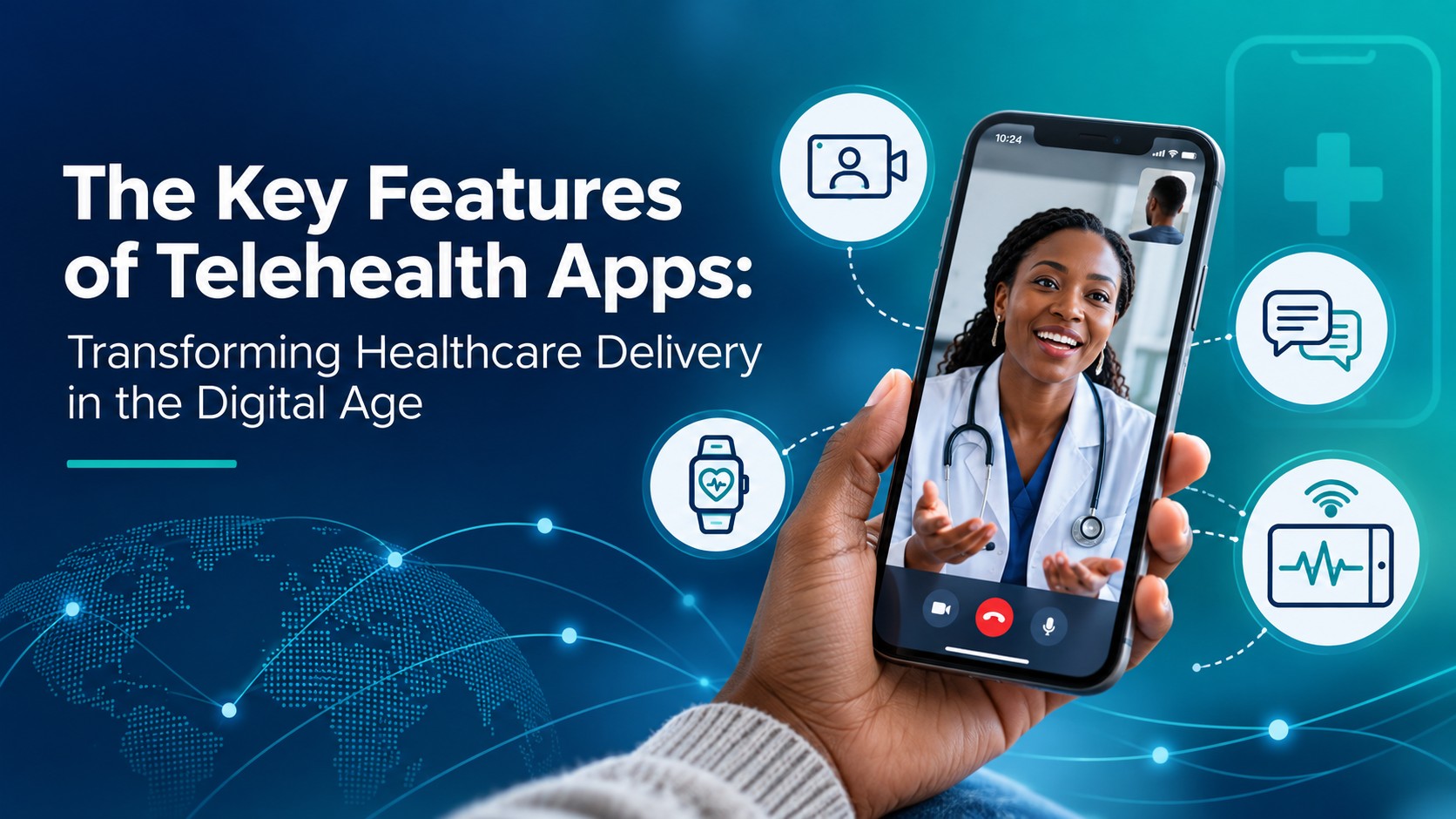
Picture the last time you had a nagging health question at 9 p.m. on a Tuesday not an emergency, just enough to keep you refreshing WebMD instead of sleeping. A decade ago, your options were limited: wait it out, drive to urgent care, or lie awake diagnosing yourself with increasingly dramatic conditions. Today, you pull out your phone, tap an app, and you’re looking at a licensed clinician within minutes. That shift from “wait and see” to “tap and see someone” is the quiet revolution telehealth apps have pulled off, and most of us barely noticed it happening.
Whether you’re in Chicago, Calgary, or Camden, the tools have converged on a shared set of expectations. You want care that fits into your life, not the other way around. So let’s get into exactly what makes a telehealth app worth your time and your trust.
What Is a Telehealth App, Exactly?
Before diving into features, it’s worth settling the terminology, because the industry loves to blur it. Telehealth is the broad umbrella: any use of technology to deliver, support, or coordinate health services from a distance. Telemedicine is the narrower slice the clinical piece, like a doctor diagnosing and treating you over video. In practice, most apps blend both, offering everything from live consultations to appointment scheduling and lab result delivery.
According to the U.S. Department of Health and Human Services’ telehealth resource hub, telehealth breaks down into two core categories: synchronous care, meaning real-time interaction such as a video call, and asynchronous care often called “store and forward” where information like photos, messages, or vitals gets sent for a provider to review later. Everything your favorite health app does lives somewhere on that spectrum.

The Core Features That Define a Great Telehealth App
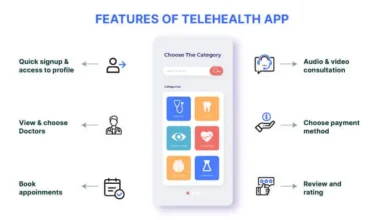
Not all telehealth apps are created equal, and the difference usually comes down to a handful of features working in concert. Here’s the breakdown of what separates a genuinely useful platform from a glorified video-chat window with a medical logo slapped on it.
| Feature | What It Does | Why It Matters to You |
|---|---|---|
| Secure video and audio visits | Encrypted, HIPAA-compliant (or equivalent) live consultations | Lets you see a provider face-to-face without leaving your couch |
| Asynchronous messaging | Text-based Q&A, symptom photos, follow-up notes | Handles non-urgent questions without booking a full visit |
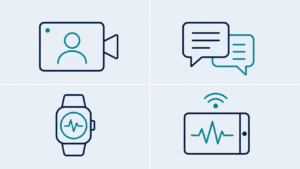
| Remote patient monitoring (RPM) | Syncs data from connected devices like blood pressure cuffs, glucose meters, or wearable scales | Keeps your care team aware of chronic conditions between visits |
| E-prescribing | Sends prescriptions directly to your pharmacy | Cuts out the paper slip and the extra errand |
| Integrated scheduling | Books, reschedules, or cancels appointments in-app | Removes the back-and-forth phone tag |
| EHR integration | Connects to your broader medical record | Keeps your history consistent across providers |
| Digital intake and consent | Handles paperwork and informed consent before the visit | Saves the awkward waiting-room clipboard shuffle |
| Multilingual and accessibility support | Offers interpretation services and screen-reader compatibility | Widens access for non-English speakers and people with disabilities |
That RPM row deserves a little extra attention, because it’s arguably the feature doing the most quiet, unglamorous work behind the scenes. As the HHS best-practice guide on telehealth and remote patient monitoring explains, RPM lets patients and providers manage both acute and chronic conditions through continuous data sharing rather than periodic snapshots meaning your care team can catch a worrying trend in your blood pressure weeks before it would’ve surfaced at your next scheduled checkup.
The Different Types of Telehealth Apps
Telehealth isn’t a single tool; it’s a toolbox. The HHS provider guide organizes it into a few recognizable categories, and understanding them helps you figure out what you actually need versus what a slick marketing page is trying to sell you.
Synchronous care is the live, in-the-moment interaction video calls, audio-only calls when video isn’t practical, and secure real-time texting with a provider.
Asynchronous telehealth, or store-and-forward care, covers anything sent for later review: a photo of a rash, lab results, or a message with follow-up instructions.
Mobile health (mHealth) apps live on your phone or wearable and support your health passively think fitness trackers, medication reminder apps, or tools that store your discharge instructions.
Remote patient monitoring (RPM) transmits data from connected medical devices blood pressure monitors, pacemakers, glucose meters, oximeters, wireless scales, and heart rate monitors straight to your provider.
Most modern telehealth apps don’t pick one lane; they blend two or three of these into a single dashboard, which is part of why “What is a telehealth app?” has become a genuinely harder question to answer than it was five years ago.
Why People Keep Asking “What Are the 4 P’s of Telehealth?”
If you’ve gone down the telehealth rabbit hole online, you’ve probably run into some version of the “4 P’s” framework. It’s not an official government or regulatory designation it shows up mainly in telehealth nursing and training material as a simple way to organize what needs to align for a remote visit to go well: Patient (whose needs and comfort with the technology shape the whole encounter), Provider (the clinician delivering care remotely), Platform (the actual app or software, and how intuitive it is), and Policy (the licensure, privacy, and reimbursement rules governing the encounter). Treat it as a useful mental model rather than an authoritative standard miss any one of the four, though, and the experience tends to wobble. A brilliant platform means little if the policy behind it won’t let your provider treat you across a state or provincial line.
The Benefits: Why Telehealth Apps Have Earned Their Spot on Your Home Screen
The appeal isn’t just convenience, though convenience is doing a lot of the heavy lifting. The clinical case has gotten steadily stronger, too.
A widely cited review of 38 meta-analyses on telehealth’s clinical effectiveness, led by researcher Centaine Snoswell and colleagues, found that telehealth performs as well as or better than in-person care across a range of specialties including stroke management, blood pressure control, mental health support, pain management, blood glucose control, and diagnostic imaging for skin and eye conditions. The authors were careful to note the evidence is still uneven across disciplines, but the overall conclusion holds: in the right context, going virtual doesn’t mean settling for less.
That evidence extends to the apps themselves, not just video visits though here the picture is more mixed than marketing copy usually admits. A 2021 systematic review and meta-analysis in JMIR mHealth and uHealth pooled 172 randomized controlled trials covering more than 21,000 participants and found that using an app to support behavior change produced only a slight advantage over standard care, with considerable variation between studies. The authors were candid about the limits of their own findings, concluding that the evidence apps improve health outcomes remains weak and that the field needs stronger evaluation methods a useful reminder that “there’s an app for that” isn’t the same as “the app works.” A broader 2023 umbrella review in npj Digital Medicine, which pooled findings from 48 separate systematic reviews, struck a more optimistic note: 41 of the 48 concluded that app-based health interventions improved outcomes, spanning glycemic control in type 2 diabetes, blood pressure, and medication adherence, while the remaining seven reported inconclusive or mixed results.
Here’s a snapshot of where the evidence is strongest, drawn specifically from the 2023 umbrella review’s pooled data:
| Health Condition | What the Evidence Actually Shows |
|---|---|
| Type 2 diabetes (HbA1c) | Across 13 systematic reviews, 27 of 28 pooled estimates pointed toward improvement, though only 18 of 28 reached statistical significance |
| Hypertension (systolic blood pressure) | Across 9 systematic reviews, 8 of 10 pooled estimates showed a reduction, but only 4 of 10 were statistically significant |
| Medication adherence (any condition) | 6 out of 6 systematic reviews found a statistically significant increase in adherence |
| Skin cancer screening (teledermatology) | One meta-analysis cited by Snoswell and colleagues reported 94.9% sensitivity and 84.3% specificity for remote image-based diagnosis |
Notice the pattern: effects are real but rarely dramatic, and statistical significance is far from guaranteed even when a study points in the right direction. That’s not a knock against telehealth apps it’s simply what rigorous, honest research on complex health behavior tends to look like. Be wary of any app’s marketing copy that implies otherwise.
Beyond the data, the day-to-day benefits are the ones you’ll actually feel: shorter wait times, no commute, easier access if you live somewhere rural, and a lower bar for addressing something before it becomes a bigger deal. Telehealth can be a particularly strong option for parents managing a sick child’s follow-up care, patients juggling multiple specialists, or anyone whose work schedule makes a mid-day clinic visit a logistical nightmare.
What to Look For Before You Download
Not every app deserves a permanent spot on your phone. Before committing, it helps to run through the same questions providers are encouraged to ask when vetting a platform, drawn from HHS’s own vendor-selection guidance:
- Is the app compliant with health privacy regulations in your region (HIPAA in the U.S., PIPEDA in Canada, UK GDPR in the U.K.)?
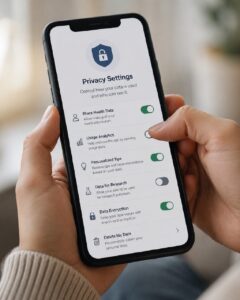
- Does it clearly explain how your data is stored, shared, and protected?
- Can you easily reach a real human if the technology fails mid-visit?
- Does it support your insurance, provincial health plan, or NHS pathway, where relevant?
- Is informed consent built into the process, not buried in fine print?
- Does it work well on a slower connection, or does it demand flawless broadband?
The Trade-Offs: Where Telehealth Still Falls Short
None of this is a sales pitch for abandoning in-person care altogether, and any honest conversation about telehealth apps has to include their limits.
Physical exams remain physical exams a virtual visit can’t replace a hands-on assessment for certain injuries, palpations, or procedures. Technology access is still uneven, and the World Health Organization’s consolidated telemedicine implementation guide is direct about this: it notes that telemedicine often demands higher network bandwidth than other digital health tools, which means the digital divide can bite harder here than elsewhere, and it specifically calls out the need to consider people with low digital literacy, limited access to devices, minority-language speakers, migrants, and people with disabilities when designing telemedicine programs groups who can otherwise be left out of the access gains telehealth is supposed to deliver. Connectivity issues can derail a visit at the worst possible moment. And regulatory patchwork licensure rules that don’t always cross state, provincial, or national borders can complicate care for anyone traveling or living near a border.
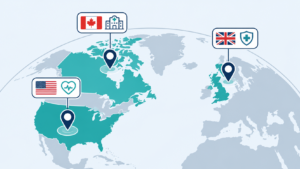
How Telehealth Looks Different in the US, Canada, and the UK
The core technology is largely the same wherever you are, but the surrounding system changes the experience quite a bit and the differences are bigger than most explainers let on.
In the United States, coverage depends heavily on your specific insurance plan and state licensure rules. On the Medicare side specifically, the picture has been genuinely unstable: pandemic-era flexibilities lapsed briefly during a 2025 government funding gap, were restored retroactively, extended again through January 2026, and then extended further through the end of 2027 by a February 2026 budget bill. That’s three policy changes in under six months a reminder to check your plan’s current terms rather than assuming last year’s coverage still applies.
In Canada, healthcare delivery is a provincial and territorial responsibility, so what’s covered and whether you can see your own family doctor virtually at no out-of-pocket cost genuinely depends on where you live. National data has shown provinces like British Columbia and Newfoundland and Labrador with far higher virtual-care usage than provinces like Quebec, Alberta, and Prince Edward Island, where a large majority of patients still see their doctor only in person. If you move provinces, don’t assume your virtual care access moves with you.
In the United Kingdom, the NHS has pushed hard toward digital-first primary care: nearly all GP practices in England are now equipped to offer video consultations, and practices are required to make video an option under national digital-first policy. In practice, many patients still start with a phone consultation, with video or an in-person visit following if needed it functions less like a separate app experience and more like a built-in front door to the existing GP system.
The upshot: the features covered above video visits, messaging, remote monitoring translate across borders, but the fine print around cost, eligibility, and which providers can legally treat you absolutely does not. Always check the specifics for where you actually live, not just where the app happens to be headquartered.
Frequently Asked Questions
What are the benefits of using a telehealth app? Beyond convenience, the main benefits include reduced travel and wait times, easier access to specialists regardless of location, continuity of care through remote monitoring, and per the clinical evidence above outcomes that are frequently comparable to in-person visits for many conditions.
Can children use telemedicine? Yes. Pediatric telehealth is widely used for follow-up visits, minor illness checks, and behavioral health support, though many pediatricians still prefer in-person visits for well-child checks involving physical growth measurements and vaccinations.
What is the difference between telehealth and telemedicine? Telehealth is the broader umbrella term covering any remote health service, including non-clinical uses like provider education or administrative meetings. Telemedicine specifically refers to clinical services diagnosis, treatment, and consultation delivered remotely.
What is the difference between mobile health (mHealth) and telehealth? mHealth refers specifically to health-related tools that live on your phone or wearable device, like fitness trackers or medication reminder apps. Telehealth is the umbrella category that mHealth, along with video visits and remote monitoring, all fall under.
Is it safe to use telehealth? Reputable telehealth platforms use encryption and comply with regional privacy laws to protect your health information. As with any digital service, it’s worth confirming an app’s privacy practices before sharing sensitive details, and using it on a secure, private connection.
Why is my telehealth visit not working? The most common culprits are unstable internet connections, outdated app versions, browser permissions blocking your camera or microphone, or firewall settings on hospital or workplace Wi-Fi. Most platforms offer an audio-only fallback if video keeps failing.
What are the disadvantages of using telehealth? Limitations include the inability to conduct hands-on physical exams, unequal access to reliable technology, potential technical glitches during visits, and licensure rules that can restrict which providers can treat you depending on where you’re physically located.
What should you use telehealth for? Telehealth tends to work best for follow-up appointments, medication management, minor illness triage, mental health support, chronic condition check-ins, and specialist consultations that don’t require a physical exam. It’s less suited to situations requiring imaging, bloodwork done on-site, or hands-on procedures and it should never replace emergency care for symptoms like chest pain, severe injury, or difficulty breathing.
The Bottom Line
Telehealth apps have moved well past their pandemic-era reputation as a stopgap measure. They’ve become a genuine, evidence-backed layer of the healthcare system one built around secure video, smart monitoring, and the kind of convenience that makes people actually follow through on care they might otherwise put off. The best ones balance that convenience with real clinical rigor and real privacy protections, which is exactly what’s worth checking before you hand one your health data.
If you’ve been putting off that follow-up appointment because driving across town for a fifteen-minute conversation felt like more trouble than it was worth, this might be the nudge to finally open the app store, read the privacy policy, and book the visit. Your future self the one who caught something early instead of late will thank you.
Sources and References
- U.S. Department of Health and Human Services. “Getting Started with Telehealth.” Telehealth.HHS.gov.
- U.S. Department of Health and Human Services. “Telehealth and Remote Patient Monitoring.” Telehealth.HHS.gov Best Practice Guides.
- Snoswell, C.L., Chelberg, G., De Guzman, K.R., Haydon, H.H., Thomas, E.E., Caffery, L.J., & Smith, A.C. (2023). “The Clinical Effectiveness of Telehealth: A Systematic Review of Meta-Analyses from 2010 to 2019.” Journal of Telemedicine and Telecare, 29(9), 669–684.
- Iribarren, S.J., Akande, T.O., Kamp, K.J., Barry, D., Kader, Y.G., & Suelzer, E. (2021). “Effectiveness of Mobile Apps to Promote Health and Manage Disease: Systematic Review and Meta-analysis of Randomized Controlled Trials.” JMIR mHealth and uHealth, 9(1), e21563.
- Chong, S.O.K., Pedron, S., Abdelmalak, N., Laxy, M., & Stephan, A.J. (2023). “An Umbrella Review of Effectiveness and Efficacy Trials for App-Based Health Interventions.” npj Digital Medicine, 6, 233.
- World Health Organization. (2022). “Consolidated Telemedicine Implementation Guide.” Geneva: World Health Organization.