Introduction:
There’s a particular kind of tired that no amount of sleep fixes. You know the one: the 2 p.m. slump that hits even after eight hours in bed, the low-grade static that hums under an otherwise “fine” day. Somewhere between the third coffee and the fourth Slack notification, most of us start asking the same quiet question: is this just what adulthood feels like, or am I missing something?
You’re not missing a supplement, a subscription, or a 5 a.m. cold plunge. What you’re likely missing is a working definition of healthy living and wellness one that isn’t borrowed from a fitness influencer’s highlight reel. This guide is built to give you that definition, plus the pillars, rules, and daily mechanics that make it stick, whether you’re reading this from a walk-up in Brooklyn, a condo in Toronto, or a terraced house outside Manchester.

What Healthy Living and Wellness Actually Mean (And Why They’re Not the Same Thing)
Health and wellness get used interchangeably so often that the distinction has nearly disappeared which is a shame, because it’s the distinction that matters most.
Health is largely a measurable state: blood pressure, cholesterol, the absence or presence of disease. It’s clinical. Wellness is the ongoing, active pursuit of choices that lead toward a fuller, more vital life it’s less a snapshot and more a direction of travel. You can be “healthy” on paper and still feel depleted. You can be managing a chronic condition and still be deeply well. That gap is exactly where this article lives.
Public health authorities have converged on a similar idea. The World Health Organization’s European fact sheet on everyday actions for better health frames a healthy lifestyle around a short list of everyday choices avoiding tobacco, limiting alcohol, eating a balanced diet, and staying physically active not a rigid checklist, but a framework flexible enough to bend around a real life.
How Many Pillars Does Healthy Living Actually Have?
Search around and you’ll find “the 7 pillars of healthy living,” “the 5 pillars of a healthy lifestyle,” and “the 4 pillars of wellness” all confidently stated, all slightly different. The honest answer: the number changes depending on who’s counting, but the substance rarely does. Here’s how the most common frameworks stack up.
| Framework | Core Components | Best For |
|---|---|---|
| 4 Pillars of Wellness | Physical, Mental, Social, Purpose/Spiritual | Beginners wanting a simple mental model |
| 5 Pillars of a Healthy Lifestyle | Nutrition, Movement, Sleep, Stress Management, Connection | People building a daily routine |
| 7 Pillars of Healthy Living | Physical, Emotional, Social, Intellectual, Environmental, Occupational, Financial | Anyone auditing their whole life, not just their gym schedule |
Notice the pattern: every version includes body, mind, and relationships in some form. The differences are mostly about how finely you want to slice the pie. If you’re just starting out, the 4-pillar model is plenty. If you’re doing a deeper self-audit the kind you do in January, or after a health scare, or during a quarter-life reassessment the 7-pillar model gives you more surface area to work with.
The 8 Dimensions of Wellness: The Fuller Picture
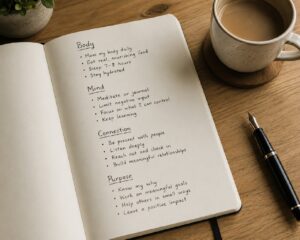
If pillars are the load-bearing walls, dimensions are the rooms inside the house. Wellness researchers many building on frameworks popularized by U.S. university health centers typically describe eight interconnected dimensions:
- Physical — sleep, movement, nutrition, preventive care
- Emotional — the ability to cope, recover, and feel a full range of emotion without being ruled by it
- Social — the quality (not just quantity) of your relationships
- Intellectual — curiosity, learning, mental stimulation outside of work tasks
- Environmental — your surroundings, from air quality to clutter
- Occupational — whether your work feels aligned with your values and skills
- Financial — a sense of security and control over money, independent of how much you have
- Spiritual — a sense of meaning or purpose, which doesn’t have to be religious at all
That last one trips people up. The spiritual dimension isn’t about doctrine it’s about whether you feel like your days add up to something. People who report a stronger sense of purpose consistently show better resilience during hard seasons, which is part of why “spiritual wellness” now shows up in secular workplace wellness programs across the U.S., Canada, and U.K. alike.
The Rules That Make This Easy to Remember
Frameworks are only useful if you can recall them without opening an app. Two shorthand rules have earned their popularity because they’re genuinely memorable.
The 3-3-3 Rule for Health A simple daily check-in: 3 minutes of mindful breathing or quiet reflection, 3 different food groups at each meal, and 3 moments of movement scattered through the day (a walk, stairs, a stretch break). It’s less a prescription and more a floor the minimum viable day.
The 5-3-1 Rule for Wellness Popularized in workplace wellness and student health circles, this one breaks down as: 5 servings of fruits and vegetables, 3 moments of intentional social connection, and 1 hour of dedicated “you” time reading, hobbies, or simply doing nothing productive. Some versions extend it to a “5-3-1 socializing method,” where the numbers apply specifically to how often you see close friends versus acquaintances versus your wider circle.
Neither rule requires an app, a subscription, or a gym membership. That’s the point the best wellness habits are the ones low-friction enough to survive a bad week.
What Are the Six Simple Rules for Healthy Living?
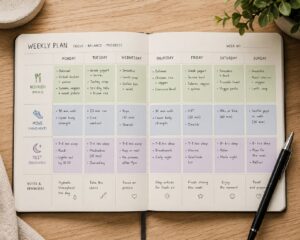
Strip away the jargon and most day-to-day wellness advice collapses into a short, repeatable list:
- Move your body most days, even briefly
- Eat mostly whole foods, most of the time
- Prioritize consistent, quality sleep
- Stay socially connected, not just digitally in touch
- Manage stress with active tools (not just avoidance)
- Get regular preventive care rather than waiting for symptoms
None of these are novel. What’s worth knowing, though, is that public health bodies don’t treat obesity and lifestyle disease purely as a matter of individual willpower. The CDC’s own obesity prevention strategies and guidelines are aimed largely at policymakers and program managers, and focus on environmental and community-level changes school health policy, safer places to walk and cycle, and better access to fruits and vegetables precisely because individual habits are easier to sustain when the environment around you supports them rather than fights you on it.
8 (or 10) Tips for Healthy Living That Actually Fit a Real Schedule
Every “healthy living” list eventually converges on the same handful of ideas the trick is applying them without turning your life into a wellness job. A few that consistently move the needle:
- Batch your protein, not your willpower. Prep proteins in bulk once or twice a week so decision fatigue doesn’t derail dinner.
- Walk before you scroll. Movement first thing shifts mood more reliably than most morning routines people pay for.
- Protect a “closing time” for screens. Sleep quality often has less to do with mattress and more to do with blue light exposure before bed.
- Treat social plans like appointments. Connection is a pillar, not an afterthought pencil it in.
- Audit your environment once a season. Clutter, noise, and poor air quality are low-visibility stressors.
- Build a “financial wellness” habit. Even a five-minute weekly money check-in reduces the anxiety that quietly erodes other pillars.
- Get a baseline checkup. Preventive screening catches issues while they’re still cheap and manageable to address.
- Give yourself one deliberately unproductive hour a week. Purpose isn’t built in hustle; it’s often clarified in stillness.
Why Stress Management Deserves Its Own Pillar
Of all eight dimensions, emotional and stress-related wellness is the one most people quietly neglect not because they don’t value it, but because it’s the hardest to schedule. You can put “gym” on a calendar. It’s harder to block time for “process the thing that’s been bothering you since Tuesday.”
It’s also the pillar most likely to quietly undermine the others. Chronic stress that goes unmanaged tends to show up elsewhere first in disrupted sleep, in skipped workouts, in meals grabbed on the run long before it registers as “a stress problem” in your own mind.
A few stress-management approaches that hold up better than the trendier alternatives:
- Name it before you numb it. Simply labeling an emotion “this is frustration,” “this is overwhelm” reduces its intensity more than distraction does.
- Move first, think second. A short walk before a difficult conversation or task often clears more mental fog than caffeine.
- Build a decompression ritual, not just a bedtime routine. A 10-minute buffer between work and home life even just changing clothes or stepping outside helps your nervous system register the day as “closed.”
- Batch your worry. Setting aside a specific 10-minute window to think through concerns, rather than letting them surface all day, is a technique borrowed from cognitive behavioral therapy that requires no app or subscription.
The Social Dimension: Why Connection Is a Health Metric, Not Just a Nice-to-Have
If there’s one pillar that gets systematically underrated, it’s social wellness. It’s tempting to file “seeing friends” under lifestyle rather than health but a growing body of public health research treats loneliness and social isolation as genuine risk factors in their own right, not just a soft, optional add-on to physical wellbeing.
This is where the 5-3-1 socializing framework mentioned earlier earns its keep: it doesn’t ask you to overhaul your calendar, just to notice whether your closest relationships are getting any deliberate attention, rather than surviving purely on group chat momentum. A phone call with an old friend, a recurring dinner with a sibling, or a standing coffee with a coworker all count the format matters far less than the consistency.
Aging Gracefully: Wellness Isn’t a Young Person’s Game
A recurring theme in wellness searches is how to age well how to stay sharp, mobile, and socially engaged into your 60s and 70s, rather than simply “getting by.” Genetics play a role, but maintained strength, ongoing social ties, and a continued sense of purpose are the levers people actually have some control over.
There’s also a philosophical thread worth borrowing here. Carl Jung’s often-cited five rules for a meaningful life good friends, meaningful work, beauty, reasonable material comfort, and faith or hope in something larger map almost perfectly onto the modern wellness dimensions above. The vocabulary has changed; the underlying wisdom hasn’t.

How Much Movement Do You Actually Need? A Real, Age-by-Age Answer
One of the more useful things public health guidance offers isn’t inspiration it’s a straight number. The WHO’s European recommendations on everyday actions for better health break physical activity targets down by life stage, and the specifics are worth knowing rather than approximating:
| Life Stage | Recommended Activity |
|---|---|
| Children (5–17 years) | An average of 60 minutes per day of moderate-to-vigorous activity, plus muscle- and bone-strengthening at least 3 times a week |
| Adults (18–64 years) | 150–300 minutes of moderate-intensity activity per week (or 75–150 minutes vigorous), plus muscle-strengthening at least twice a week |
| Older adults (65+) | Same as adults, with added emphasis on balance and strength training to reduce fall risk |
| Pregnant and postpartum women | At least 150 minutes per week of moderate activity, combining aerobic work, muscle-strengthening, and gentle stretching |
Worth noting: the same fact sheet reports that roughly 27% of adults in the WHO European Region don’t currently meet these physical activity recommendations a reminder that falling short of the target is the norm, not a personal failing, and that closing even part of that gap counts for something.
Healthy Living Across the U.S., Canada, and U.K.: What’s Actually Different
Public health guidance is broadly aligned across these three countries, but cultural texture shifts the how.
| Element | United States | Canada | United Kingdom |
|---|---|---|---|
| Physical activity guidance | 150+ min/week moderate activity | 150+ min/week, plus strength training focus | 150+ min/week via NHS guidance |
| Common wellness gaps | Long work hours, food deserts in some regions | Seasonal affective patterns, rural access to care | Sedentary commuting, alcohol-centric socializing |
| Notable strength | Strong fitness and wellness app ecosystem | Robust public mental health messaging | Strong walking/cycling infrastructure in cities |
The takeaway isn’t that one country “does wellness better.” It’s that your environment shapes which pillar needs the most attention. A Torontonian’s biggest lever might be managing seasonal light exposure; a New Yorker’s might be reclaiming lunch breaks; a Londoner’s might be building in movement that doesn’t rely on a car-free commute alone.
The 10 Health Tips Global Bodies Keep Repeating (Because They Work)
The WHO’s own ten health tips for the year ahead is a useful reality check, because it’s less “wellness” and more plain preventive medicine and a couple of the entries rarely make it into influencer content at all:
- Eat a varied diet, including at least five portions (400g) of fruit and vegetables a day
- Cut salt to around 5g a day and limit added sugar
- Favor unsaturated fats (fish, nuts, olive oil) over saturated and trans fats
- Don’t smoke, and avoid second-hand smoke
- Get 150–300 minutes of moderate-intensity activity a week
- Have your blood pressure checked regularly hypertension often has no symptoms
- Follow basic road safety rules: seatbelts, helmets, no driving under the influence
- Take antibiotics only when prescribed, and finish the full course
- Practice regular hand hygiene
- Get regular health check-ups rather than waiting for symptoms to appear
Notice what’s not framed as a personal failing here: things like antibiotic misuse and road safety are as much about public systems as individual choices. That’s a useful corrective to wellness content that puts everything on the individual some of what keeps a population healthy is genuinely outside any one person’s control, and that’s worth acknowledging rather than glossing over.
Frequently Asked Questions
What are the 7 pillars of healthy living? Most frameworks list them as physical, emotional, social, intellectual, environmental, occupational, and financial wellness each representing a distinct area of life that contributes to overall wellbeing.
What is the 3-3-3 rule for health? A simple daily habit check: 3 minutes of mindful reflection, 3 food groups per meal, and 3 short bursts of movement throughout the day.
What are examples of healthy living? Regular movement, balanced meals built around whole foods, consistent sleep, active stress management, meaningful social connection, and routine preventive healthcare.
What are the 5 pillars of wellness? Commonly defined as nutrition, physical activity, sleep, stress management, and social connection — the five most actionable levers for day-to-day wellbeing.
What is the 5-3-1 rule for wellness? A guideline suggesting 5 servings of fruits and vegetables daily, 3 moments of social connection, and 1 hour of dedicated personal time each day.
What are the 8 dimensions of wellness? Physical, emotional, social, intellectual, environmental, occupational, financial, and spiritual together forming a fuller picture of wellbeing beyond just physical health.
What is the difference between health and wellness? Health typically refers to a measurable physical or clinical state, while wellness describes the ongoing, active pursuit of a fulfilling and balanced life.
What are the four keys to a healthy lifestyle? Most simplified frameworks point to movement, nutrition, rest, and connection as the four foundational levers.
How can I improve my wellness? Small, consistent adjustments improving sleep consistency, adding short daily movement, scheduling real social time, and building in moments of reflection tend to outperform large overhauls.
Why is the spiritual dimension of wellness important? It reflects a sense of purpose or meaning, which research links to stronger resilience and better coping during stressful periods, regardless of religious belief.
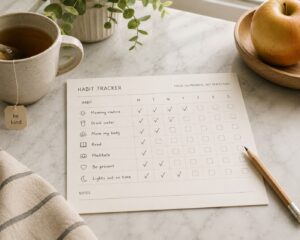
Bringing It All Together
Healthy living and wellness were never meant to be a finish line they’re closer to a practice, the kind you return to daily, imperfectly, and rebuild after the weeks that knock you off course. The frameworks, rules, and numbers in this guide aren’t rigid law; they’re scaffolding. Use the pieces that fit your actual life and let the rest go.
Start small this week: pick one pillar you’ve been neglecting sleep, connection, movement, purpose and give it deliberate attention for seven days. Notice what shifts. Then tell us about it in the comments, or share this guide with someone who’s been asking the same 2 p.m. question you were.
Source & References:
- World Health Organization (WHO/Europe). Everyday actions for better health – WHO recommendations. Published 17 July 2025.
- Centers for Disease Control and Prevention (CDC). Prevention Strategies & Guidelines – Overweight & Obesity. Last reviewed 17 August 2023.
- World Health Organization (WHO Western Pacific). 10 health tips for 2025. Published 24 December 2024.