Introduction:
Health insurance is one of those things most people only think hard about twice a year: once during open enrollment, and once when a bill lands in the mailbox that’s much bigger than expected. In between, it’s easy to make small decisions when picking a plan because the premium looked cheap, skipping a network check before an appointment, letting a deadline slide that ends up costing real money or real stress later.
None of these are dramatic failures. They’re the kind of ordinary, easy-to-miss choices that quietly shape how much you pay and how well your coverage actually protects you. This article walks through five of the most common health insurance mistakes, why they happen, and what to check instead with notes on how coverage works a little differently depending on whether you’re in the United States, Canada, or the UK.

A Quick Note on Different Systems
Before diving in, it’s worth acknowledging that “health insurance” means different things depending on where you live:
- In the United States, most people get coverage through an employer, a government marketplace plan, or programs like Medicare and Medicaid, and cost-sharing (deductibles, copays, coinsurance) plays a large role in what you pay.
- In Canada, provincial and territorial health plans cover most medically necessary hospital and physician services, and private health insurance is typically supplemental covering things like prescription drugs, dental, vision, or a private room.
- In the United Kingdom, the NHS provides most core care, and private health insurance is usually purchased to get faster access to specialists or elective procedures, not to replace NHS coverage.
The specific mistakes below are most directly relevant to US marketplace and employer plans, but the underlying principles understand your costs, check your network, don’t miss deadlines, read the fine print, and appeal denials apply to supplemental and private plans in Canada and the UK as well.
Mistake 1: Choosing a Plan Based on Premium Alone
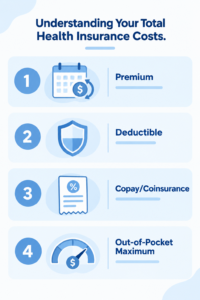
The monthly premium is the most visible number on any health plan, so it’s natural to compare plans by that figure alone. But the premium is only one piece of what you’ll actually spend. According to HealthCare.gov, your total health plan costs also include the deductible, copayments, and coinsurance you pay when you use care, plus your plan’s out-of-pocket maximum the most you could owe in a year.
A lower-premium plan often comes with a higher deductible or narrower coverage, which can work out fine if you’re healthy and rarely see a doctor, but can be expensive if you have ongoing prescriptions, a chronic condition, or an unexpected procedure.
| Cost Component | What It Means | When It Applies |
|---|---|---|
| Premium | What you pay monthly to keep the plan active | Every month, regardless of use |
| Deductible | What you pay out of pocket before insurance starts covering most costs | Until the deductible is met each plan year |
| Copay/Coinsurance | A fixed fee or percentage you pay per visit or service | Each time you use covered care |
| Out-of-pocket maximum | The most you’ll pay in a year before the plan covers 100% | Once you hit this limit |
What to do instead: Estimate your expected use of care for the coming year (regular prescriptions, a planned procedure, ongoing therapy) and compare plans on total estimated annual cost, not just the premium.
Mistake 2: Not Checking Whether Your Providers Are In-Network
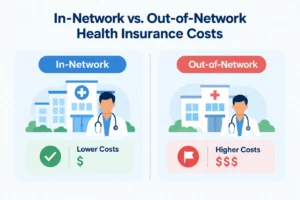
A plan can look affordable on paper and still lead to a large bill if the doctor, hospital, or specialist you see isn’t in your plan’s network. Out-of-network care is often billed at a much higher rate, and in some cases the provider can bill you directly for the difference between what they charge and what insurance pays.
This mistake shows up in a few common ways:
- Assuming a hospital being in-network means every doctor who works there is also in-network (anesthesiologists, radiologists, and specialists sometimes bill separately).
- Not confirming network status before a referral or specialist visit.
- Not checking whether a plan uses a narrower network (like an HMO) versus a broader one (like a PPO).
If you’re deciding between plan types, our guide on the difference between HMO and PPO plans breaks down how network rules differ and what that means for your flexibility and costs.
What to do instead: Call the provider’s office directly to confirm they accept your specific plan (not just your insurance company) before a scheduled visit, especially for specialists, imaging, and procedures involving multiple providers.
Mistake 3: Missing Enrollment Windows and Life-Event Deadlines
In the US, most people can only enroll in or change a marketplace or employer plan during a set open enrollment period each year, unless they qualify for a Special Enrollment Period after a life event like losing other coverage, getting married, or having a child. Missing that window can mean going without coverage, or being locked into a plan that no longer fits your situation, for months.
The same pattern shows up elsewhere: employer benefits enrollment deadlines, Medicare enrollment periods, and renewal dates for private supplemental plans in Canada and the UK all tend to be time-limited and easy to lose track of.

What to do instead: Mark your renewal or open enrollment dates on a calendar as soon as you enroll, and know which life events (job change, marriage, new baby, moving) might qualify you for a mid-year enrollment opportunity.
Mistake 4: Not Reading the Explanation of Benefits or the Plan’s Fine Print
An Explanation of Benefits (EOB) is the statement your insurer sends after a claim is processed, showing what was billed, what the plan paid, and what you owe. Many people either don’t open it or assume it’s just a bill. In reality, it’s the easiest place to catch billing errors duplicate charges, services billed that weren’t received, or a claim processed at the wrong benefit level.
Similarly, plan documents often contain exclusions and limits that aren’t obvious from a summary: waiting periods for certain treatments, caps on visits for services like physical therapy, or exclusions for specific conditions or procedures.
What to do instead: Read every EOB against your own records of what care you actually received, and keep a copy of your plan’s full benefits document (not just the summary) so you can check coverage details before a costly procedure.
Mistake 5: Not Appealing a Denied Claim
A denied claim can feel final, but it usually isn’t. According to guidance from the National Association of Insurance Commissioners (NAIC), consumers generally have the right to request a full explanation for a denial and to file an internal appeal with their insurer, and in many cases an external review afterward if the internal appeal doesn’t resolve the issue. Many denials are the result of coding errors, missing documentation, or a service being classified incorrectly not because the care wasn’t actually covered.
Despite this, a large share of denied claims are simply never appealed, often because the process feels confusing or not worth the effort for a smaller bill.
What to do instead:
- Request the specific reason for the denial in writing.
- Ask your provider’s billing office to confirm the claim was coded correctly.
- File an internal appeal as soon as possible the NAIC notes that consumers generally have up to 180 days (6 months) from the denial notice to file, though it’s best not to wait, since gathering documentation and provider support takes time.
- Keep copies of everything you submit, along with dates and names of anyone you speak to.
- If the internal appeal doesn’t resolve it, ask about your right to an external review, which is typically handled by an independent reviewer rather than your insurance company.
If insurance terminology throughout this process feels unfamiliar, our guide to common health insurance terms can help you make sense of appeal letters and denial notices.

Mistakes That Look a Little Different in Canada and the UK
Because private health coverage plays a different role outside the US, a few mistakes show up in a different form:
- In Canada, a common mistake is buying supplemental private coverage without first checking what your provincial or territorial health plan already covers. This can lead to paying for duplicate coverage, or assuming something is covered privately when it’s actually excluded because it falls under provincial care.
- In the UK, a common mistake when switching private health insurers is not checking how the new insurer treats pre-existing conditions. Depending on the type of underwriting a policy uses, a condition you were previously covered for elsewhere may not automatically carry over to a new policy, so it’s worth confirming this directly with the insurer before switching.
- In both countries, another frequent mistake is not reading the policy booklet closely enough to understand annual limits, exclusions, and waiting periods for specific treatments the same “read the fine print” issue covered in Mistake 4, just applied to a supplemental rather than a primary plan.
A Quick Checklist to Avoid These Mistakes
- Compare plans by total estimated annual cost, not premium alone.
- Confirm network status for every provider involved in a visit or procedure, not just the hospital.
- Track your enrollment and renewal deadlines every year.
- Read every EOB and keep your full plan documents on hand.
- Appeal denied claims instead of assuming the first answer is final.
For a broader foundation on how plans are structured, our health insurance basics guide and our tips on ways to save on health insurance costs are useful next reads.
Frequently Asked Questions
What’s the biggest mistake people make when dealing with an insurance claim? One of the most common mistakes is accepting a denial without asking for the specific reason or filing an appeal. Many denials stem from coding or documentation issues that can be corrected once identified, rather than the care being genuinely excluded from coverage.
Is it actually cheaper to go without health insurance? It can look cheaper in the short term because there’s no premium, but going uninsured means covering the full cost of any care yourself, including emergencies and hospital stays, which can be far more expensive than a year of premiums and cost-sharing combined. Whether it makes sense depends heavily on your health, income, and local rules, so it’s worth reviewing your options with a licensed advisor or your country’s official marketplace or health authority before deciding.
How do you fight a medical billing error? Start by comparing the itemized bill and EOB against the care you actually received. If you spot a discrepancy, contact the provider’s billing department to request a correction, and contact your insurer if the claim was processed incorrectly. Keep written records of every call and document exchanged.
What should you avoid telling your insurance company? Be honest and accurate with your insurer, but stick to the facts relevant to your claim or application rather than speculating about diagnoses, causes, or coverage decisions that aren’t yours to determine let your provider’s documentation and the insurer’s own review process establish those details.
Which mistakes are most likely to lead to a denied claim? Choosing an out-of-network provider without realizing it, missing prior-authorization requirements for certain procedures, and submitting incomplete documentation are among the most common causes of claim denials.
The Bottom Line
Most health insurance mistakes aren’t about picking the “wrong” plan they’re about missing small details along the way: what a plan actually costs beyond the premium, whether a provider is in-network, when a deadline falls, what an EOB is telling you, and whether a denial is really the final word. None of these require special expertise to catch, just a habit of checking before you assume. Building that habit is the most reliable way to make sure your coverage works the way it’s supposed to when you actually need it.
Sources & References
This article draws on the following authoritative sources:
- HealthCare.gov (U.S. Centers for Medicare & Medicaid Services) — Your total costs for health care: Premium, deductible & out-of-pocket costs
- National Association of Insurance Commissioners (NAIC) — Understanding Health Care Bills: How to Appeal Denied Claims
General explanations of insurance concepts such as open enrollment periods, in-network versus out-of-network billing, and Explanation of Benefits (EOB) statements reflect standard, widely documented practices in the U.S., Canadian, and UK health insurance systems rather than a single cited source.