Introduction:
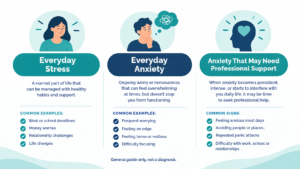
Almost everyone feels anxious at some point. A job interview, a medical appointment, a money worry, or a big life change can all set it off. In small doses, anxiety is a normal reaction to stress. The trouble starts when it lingers, feels out of proportion, or begins to shape what you do and avoid.
If you are searching for ways to handle anxiety, you probably want two things: something you can try today, and some clarity on when self-help is enough and when it is not. This guide covers both. You will find five practical anxiety management techniques, how each one works, what the research and health agencies say about them, and how to tell when it is time to talk to a professional.
One note before we start: these techniques are general health education. They are not a diagnosis or a replacement for care from a doctor or mental health professional.
What Is Anxiety, and When Does It Become a Problem?
The U.S. National Institute of Mental Health (NIMH) describes stress as the body’s response to an external cause, such as a heavy workload or an illness. Anxiety is the body’s reaction to that stress, and it can show up even when there is no immediate threat.
When you feel anxious, your body releases stress hormones such as adrenaline and cortisol, according to the NHS. That is why anxiety is physical as well as mental.
Common signs of anxiety
The NHS groups anxiety symptoms into three areas:
| Type | Examples |
|---|---|
| Physical | Faster or more noticeable heartbeat, dizziness, headaches, sweating, shaking, stomach upset, breathlessness |
| Mental | Feeling tense or nervous, trouble relaxing, constant worrying, difficulty concentrating, trouble sleeping |
| Behavioral | Avoiding places or situations, struggling to enjoy free time, constantly checking things |
Many of these symptoms can also be caused by physical health conditions, so it is not always easy to tell whether anxiety is the reason. The NHS advises against self-diagnosing and recommends speaking with a doctor if you are worried about how you feel.
Normal anxiety vs. an anxiety disorder
Occasional anxiety is part of life. An anxiety disorder is different. According to NIMH, a diagnosis of generalized anxiety disorder (GAD) requires that a person finds it hard to control worry on most days for at least six months, along with several other symptoms such as restlessness, fatigue, trouble concentrating, irritability, muscle tension, or sleep problems. Only a qualified professional can make that diagnosis.
The American Psychological Association (APA) lists several types of anxiety disorders, including generalized anxiety disorder, panic disorder, phobias, and social anxiety disorder. The techniques below can support day-to-day anxiety management for many people, but they are not a substitute for treatment when anxiety is severe or persistent.
5 Simple Techniques for Anxiety Management
No single technique works for everyone. NIMH notes that finding what helps may take some trial and error. Try one or two at a time, give each a fair chance, and keep what works for you.
1. Slow Down Your Breathing
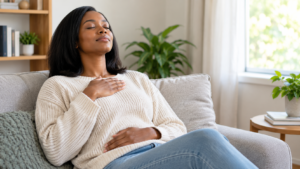
When anxiety spikes, breathing often becomes fast and shallow, which can make dizziness, tingling, and chest tightness feel worse. The NHS lists calming breathing exercises among the things people can try for anxiety, fear, and panic.
A simple way to start:
- Sit or lie down somewhere comfortable and let your shoulders drop.
- Breathe in gently through your nose.
- Breathe out slowly through your mouth, making the out-breath a little longer than the in-breath.
- Repeat for a few minutes, paying attention to the feeling of your breath.
You may see specific counting patterns online, such as the “4-7-8” method. Those can feel helpful to some people, but I am not aware of strong evidence that any one counting pattern beats another, so choose a rhythm that feels comfortable rather than strained. If you feel lightheaded, stop and breathe normally.
Best for: moments when you feel your body “revving up,” and as a daily wind-down habit.
2. Ground Yourself in the Present Moment
Anxiety often pulls attention toward “what if” thoughts about the future. Grounding and mindfulness techniques bring your attention back to what is happening right now.
NIMH says that stress management techniques such as exercise, mindfulness, and meditation can reduce anxiety symptoms and can enhance the effects of psychotherapy. Its stress fact sheet also describes mindfulness as paying attention to the present moment on purpose.
Two popular grounding exercises are:
- The 5-4-3-2-1 method: Name five things you can see, four you can touch, three you can hear, two you can smell, and one you can taste.
- The 3-3-3 rule: Name three things you can see, name three sounds you can hear, and move three parts of your body, such as your fingers, shoulders, and feet.
A caution on evidence: mindfulness and meditation have research support, according to NIMH. The specific “5-4-3-2-1” and “3-3-3” formats, however, are widely shared practical tools, and I could not find them described as named methods in the agency sources used for this article. Think of them as simple ways to practice present-moment attention, not as clinically tested treatments.
Best for: racing thoughts, feeling overwhelmed in a crowd, or the start of a panic-like surge.
3. Support Your Body With Movement, Sleep, and Steady Habits
Anxiety management is not only about what you do in the moment. Daily habits shape how reactive your body is.
Both NIMH and the NHS point to the same basics:
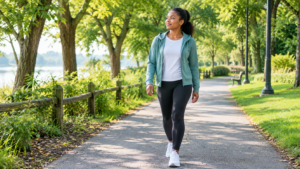
- Regular exercise. The NHS names walking, running, swimming, and yoga as activities that can help you relax.
- Regular, healthy meals. The NHS recommends eating regularly to keep your energy levels stable.
- A steady sleep routine. NIMH recommends sticking to a sleep routine and getting enough sleep.
- Less caffeine. NIMH recommends avoiding excess caffeine from soft drinks or coffee, and notes that cutting back on caffeine and getting enough sleep can reduce anxiety symptoms when combined with standard care.
- Avoiding alcohol, cigarettes, gambling, and drugs as a way to cope. The NHS says these can all contribute to poor mental health.
NIMH is clear that healthy habits help but cannot replace treatment when treatment is needed.
If home stress is affecting your rest, our guide on how everyday home stressors can affect sleep and energy may help. If you also feel drained or worn down, see these burnout recovery tips.
Best for: lowering your baseline level of anxiety over weeks, not only in the moment.
4. Notice and Challenge Unhelpful Thoughts
Anxious thinking tends to follow patterns: assuming the worst, expecting to fail, or treating a possibility as a certainty. Writing these thoughts down can make them easier to examine.
NIMH suggests two related steps for coping with stress and anxiety: keeping a journal and identifying and challenging negative, unhelpful thoughts. This approach borrows from cognitive behavioral therapy (CBT), which NIMH calls a well-studied, research-supported therapy commonly used for GAD. The APA also describes CBT as highly effective for anxiety disorders and explains that its cognitive side helps people understand how their thoughts contribute to anxiety symptoms.
Self-guided thought-checking is a simplified version of what a trained therapist does. A basic version looks like this:
- Write the worry down in one sentence.
- Ask what is actually known. What facts support this thought? What facts do not?
- Ask what you would say to a friend who had the same worry.
- Write a more balanced version, such as “This is uncertain, and I can handle the next step.”
Keep expectations realistic. A journal can help you spot patterns, but it is not the same as therapy, and it may not be enough if anxiety is intense or long-lasting.
Best for: repeated worries, “what if” loops, and anxiety that builds at night.
5. Face Fears Gradually Instead of Avoiding Them
Avoiding what makes you anxious feels like relief in the short term. Over time, it can make anxiety stronger. The APA notes that avoidance can backfire and feed the anxiety. The NHS gives similar advice: do not avoid situations that make you anxious, and try slowly building up time spent in worrying situations to gradually reduce anxiety.
The key word is gradually. A practical approach:
- List situations you avoid, from least to most stressful.
- Start with the easiest one.
- Stay in the situation long enough to notice the anxiety rise and then ease.
- Move up the list only when the previous step feels manageable.
The NHS also recommends setting small, achievable targets instead of trying to do everything at once. If a fear is intense, or if it involves trauma, a trained professional can guide this process more safely. The APA notes that psychologists will not push patients into feared situations until they have the skills to handle them.
Best for: anxiety that has narrowed your daily life, such as avoiding driving, social events, or workplaces.
Quick Comparison of the 5 Techniques
| Technique | Time needed | Useful when | Main source of support |
|---|---|---|---|
| Slow breathing | 2–5 minutes | Your body feels tense or racing | NHS |
| Grounding and mindfulness | 1–10 minutes | Thoughts are racing or spiraling | NIMH |
| Movement, sleep, and routine | Ongoing | You want to lower overall anxiety | NIMH, NHS |
| Challenging thoughts | 5–15 minutes | Worries repeat or build up | NIMH, APA |
| Gradual exposure | Ongoing, step by step | Avoidance is shrinking your life | APA, NHS |
Time ranges are practical suggestions, not clinical standards.
What About a Panic Attack?
A panic attack is a sudden surge of intense fear. According to the NHS, symptoms can include a racing heartbeat, dizziness, shortness of breath, sweating, trembling, tingling in the fingers or lips, nausea, and a feeling of losing control. The NHS says a panic attack usually lasts 5 to 20 minutes and, although it can be frightening, it is not dangerous and should not harm you.
Slow breathing and grounding are reasonable first steps during an attack. However, chest pain and breathlessness can also be signs of a medical emergency. If you are unsure, or if the symptoms are new or severe, get medical help right away.
What to Avoid When You Feel Anxious
- Using alcohol, drugs, or nicotine to calm down. The NHS specifically advises against this.
- Heavy caffeine intake. NIMH recommends avoiding excess caffeine.
- Constant avoidance. It may bring short-term relief but can reinforce anxiety.
- Trying to change everything at once. The NHS recommends small, achievable targets.
- Believing you are alone. The NHS notes that most people experience anxiety or fear at some point.
- Self-diagnosing. Symptoms of anxiety overlap with other conditions, so a professional assessment matters.
When to Seek Professional Help
Self-help techniques are a good starting point, but they are not always enough. NIMH advises seeking professional help when anxiety starts to cause problems in daily life, such as at school, at work, or in relationships. The NHS says to see a GP if you are struggling to cope or if the things you are trying are not helping.
What treatment can look like
According to NIMH, treatment for GAD typically involves psychotherapy, medication, or both, and the right plan depends on your needs, preferences, and medical situation.
| Option | What it involves | What to know |
|---|---|---|
| Psychotherapy (talk therapy) | Includes CBT and acceptance and commitment therapy (ACT) | NIMH calls CBT the “gold standard” for psychotherapy. It can be delivered in person or through telehealth |
| Medication | Prescribed by a health care provider, such as antidepressants or other anti-anxiety medications | NIMH says some medications take several weeks to work and may cause side effects. Dosing and suitability must be decided by a prescriber |
| Support groups | Sharing experiences with others | NIMH advises using group advice cautiously, since it does not replace a provider’s recommendations |
The APA reports that anxiety disorders are very treatable and that behavioral treatment, alone or combined with medication, is highly effective for most people. Because telehealth therapy is available in many areas, it may be a convenient first step for people who find in-person appointments hard to access.
Who to contact
- United States: Start with a primary care provider, who can refer you to a psychologist, psychiatrist, or clinical social worker.
- United Kingdom: The NHS says you can see a GP, and if you are 18 or over (or 16 or over in some areas) you can refer yourself to an NHS talking therapies service without seeing a GP.
- Canada: A family doctor or your provincial or territorial health services are a reasonable place to start.
Questions you can ask a health care professional
- Could my symptoms have a physical cause that should be checked?
- Does what I am describing fit an anxiety disorder?
- What are the treatment options, and what are the pros and cons of each for me?
- Can therapy be done by telehealth?
- How will we know if the plan is working?
If you need urgent help
If you are in crisis or thinking about harming yourself, do not wait. In the United States, call or text 988 (the 988 Suicide & Crisis Lifeline) or call 911 in a life-threatening situation. In Canada, you can call or text 9-8-8 for suicide crisis support, or call 911 in an emergency. In the United Kingdom, Samaritans are available any time by calling 116 123, and the NHS provides guidance on where to get urgent help for mental health. In a life-threatening emergency, call 999. Please verify local numbers and availability for your area.
Frequently Asked Questions About Anxiety
What is the 3-3-3 rule for anxiety?
It is a quick grounding exercise: name three things you see, name three sounds you hear, and move three parts of your body. It is a popular practical tool for shifting attention to the present. It is not a medical treatment, and I could not confirm it as a named method in the NHS, NIMH, or APA pages used for this article.
What is the best way to manage anxiety?
There is no single best method. NIMH and the NHS both point to a combination of approaches: calming techniques, regular exercise, sleep, healthy meals, less caffeine, talking to someone you trust, and professional treatment when needed.
What is the best treatment for anxiety?
For anxiety disorders, NIMH says treatment typically involves psychotherapy, medication, or both. CBT is the most studied psychotherapy for GAD. The best option depends on the person, so a health care provider can help you decide.
How can I calm anxiety in the moment?
Try slow breathing with a longer out-breath, a grounding exercise, or a short walk. These may ease symptoms for many people, though results vary and they do not treat an underlying anxiety disorder.
What are the common symptoms of anxiety?
Symptoms can be physical (a faster heartbeat, sweating, dizziness), mental (constant worry, trouble concentrating, sleep problems), and behavioral (avoiding situations). Because other conditions can cause similar symptoms, a professional can help work out the cause.
What drinks or foods help anxiety?
The sources used for this article do not identify a food or drink that treats anxiety. They do recommend regular, healthy meals and limiting excess caffeine. Alcohol should not be used to relieve anxiety, according to the NHS.
Do vitamins, magnesium, CBD, or herbal remedies help anxiety?
I cannot confirm that from the sources used here, and I am not certain about the current state of the research, so please verify it with a current, authoritative source. Supplements can interact with medications and affect people differently, so check with a doctor or pharmacist before starting one.
Can anxiety go away?
Many people reduce their symptoms significantly. The APA says most people with anxiety disorders can reduce or eliminate symptoms after several months of psychotherapy, and many notice improvement after just a few sessions. NIMH adds that setbacks may happen along the way, and that treatment can take some trial and error.
What is the worst habit for anxiety?
Research on a single “worst” habit is not established, but the main ones named by health sources are avoiding anxiety-provoking situations, relying on alcohol or other substances to cope, and excess caffeine. Poor sleep is also something NIMH highlights as worth addressing.
Who is most likely to experience anxiety?
Anyone can. NIMH notes that GAD may run in families, usually begins gradually in early adulthood, and is more common in women than men. Stressful environments and traumatic events may raise risk, though the exact cause is not known.
The Bottom Line
Anxiety is common, and it is manageable. Slow breathing, grounding, steady daily habits, balanced thinking, and facing fears gradually are simple techniques that health agencies and psychologists support. They work best when you practice them regularly, not only during a spike of anxiety.
Pay attention to how much anxiety is limiting your life. If it keeps you from work, school, relationships, or rest, or if self-help is not working, reach out to a doctor or mental health professional. Effective treatments exist, and asking for help early is a practical step, not a sign of weakness.
Sources
- NIMH: Generalized Anxiety Disorder: What You Need to Know
- NIMH: I’m So Stressed Out! Fact Sheet
- APA: How Psychologists Help With Anxiety Disorders
- NHS: Anxiety, Fear and Panic
This article is for general education and does not replace advice from a qualified health professional.