Introduction:

Most weight loss tips/content online is built around speed: how to drop 10 pounds in a week, 20 pounds in a month, and so on. The research doesn’t support those timelines, and chasing them tends to backfire. This article sticks to what’s actually well-supported: a realistic pace, a handful of habits with real evidence behind them, and honest answers to the questions people search most often about weight loss.
What a Realistic Pace Actually Looks Like
Both the CDC and Mayo Clinic point to the same number: people who lose weight gradually, at roughly 1 to 2 pounds a week, are more likely to keep it off long-term than people who lose weight faster. That pace typically comes from a daily calorie deficit of about 500 to 750 calories.
That means a goal like “lose 10 pounds in 3 days” isn’t a stretch goal it’s not physiologically realistic to do safely, and the CDC specifically flags goals like “losing 20 pounds in 2 weeks” as the kind of unrealistic target that leads to people giving up. If you’re chasing a fast number, it’s worth resetting the timeline before you reset anything else.
1. Build a Moderate Calorie Deficit Not a Crash Diet
A calorie deficit is the core requirement for weight loss. The amount matters: cutting too hard makes a diet harder to sustain and can trigger a “failure” feeling when a plateau hits, according to a review of dietary strategies published in the Journal of Obesity & Metabolic Syndrome. A deficit of roughly 500–750 calories a day is the range most commonly recommended by obesity guidelines and clinical bodies.

Practical ways to get there:
- Swap sugary drinks for water, sparkling water, or unsweetened tea
- Add low-fat, fiber-rich foods (vegetables, fruit) that fill you up for fewer calories the CDC’s cutting-calories guide has good side-by-side swaps, like using non-fat milk instead of whole milk or air-popped popcorn instead of oil-popped
- Cook more meals at home so you control what goes into them
- Read labels for hidden added sugar in places you wouldn’t expect: salad dressing, granola, flavored yogurt
For more detail on where calories quietly add up, the CDC’s guide on cutting calories has practical swaps worth borrowing directly.
2. Know Your Starting Point
Body Mass Index (BMI) is an imperfect tool it doesn’t account for muscle mass or body composition but it’s the standard first-pass screening measure clinicians use.
| BMI Range | Classification |
|---|---|
| Below 18.5 | Underweight |
| 18.5 – 24.9 | Healthy weight |
| 25 – 29.9 | Overweight |
| 30 and above | Obesity |
Whether a specific number on the scale counts as “overweight” for you specifically depends on height, frame, and body composition which is a conversation better had with a doctor than settled by a BMI calculator alone.
3. Prioritize Protein
Protein has a higher thermic effect than other macronutrients digesting it burns roughly 20–30% of its own calories, compared to 5–10% for carbohydrates and 0–3% for fat, according to research on diet-induced thermogenesis. It also supports satiety and helps preserve muscle mass during a calorie deficit, which matters especially for long-term weight maintenance.
Good, accessible sources include eggs, Greek yogurt, chicken, fish, tofu, lentils, and cottage cheese. Spreading protein across meals, rather than loading it all at dinner, is generally more effective for satiety than one large serving.
4. Don’t Underestimate Walking and Daily Movement
You can lose weight without structured exercise, primarily through diet, according to Mayo Clinic but movement makes it easier and supports keeping the weight off. Non-exercise activity (walking, taking stairs, standing more) adds up over a day and doesn’t require a gym.

Mayo Clinic recommends working up to at least 30 minutes of aerobic activity most days of the week as a baseline, with some people needing more depending on their goals.
5. Add Strength Training
Strength training at least twice a week is part of Mayo Clinic’s core recommendations for weight loss and maintenance, alongside aerobic activity. Muscle tissue has a higher resting metabolic cost than fat tissue, so preserving muscle during a deficit supports your metabolic rate over time though this effect is modest per pound and shouldn’t be oversold as a dramatic metabolism “boost.”
There isn’t one exercise that uniquely “burns the most fat” compound movements (squats, deadlifts, rows) recruit more muscle mass per rep than isolated exercises, which is why they tend to burn more total energy, but no single move outperforms consistent training plus a calorie deficit overall.
6. Protect Your Sleep
Sleep is one of the more overlooked pieces of weight management, and the CDC lists it as one of the lifestyle factors alongside nutrition, activity, and stress that supports a healthy weight. The mechanism is genuinely debated: some controlled studies (including a well-known 2004 trial) found that sleep restriction lowers leptin and raises ghrelin, hormones involved in hunger and fullness, and increases self-reported hunger. However, a more recent meta-analysis of randomized trials found no consistent change in these hormone levels after short-term sleep deprivation so the hormonal explanation isn’t as settled as it’s sometimes presented. What’s better supported is the behavioral link: poor sleep is consistently associated with a higher likelihood of overweight and obesity in population-level research, likely through some combination of appetite, energy, and decision-making effects, even where the exact hormonal pathway is still debated.
7. Manage Stress
Chronic stress keeps cortisol elevated, and sustained high cortisol is associated with increased abdominal fat storage and stress-driven eating of high-calorie “comfort foods,” per multiple reviews on cortisol and weight. The strongest evidence for cortisol driving fat storage comes from Cushing’s syndrome (a condition of cortisol excess), where abdominal fat resolves once cortisol is medically normalized a more extreme case than ordinary daily stress. For most people, the practical takeaway is narrower than “cortisol belly” headlines suggest: managing stress is worth doing for its own sake, and it likely supports weight management indirectly by reducing stress-driven eating, rather than through some direct fat-targeting mechanism.
8. Plan for Maintenance From the Start
Losing weight and keeping it off are different challenges, and a review of dietary strategies for weight loss and maintenance notes that higher-protein eating in particular supports maintenance by preserving muscle and increasing satiety. Its broader conclusion: there’s no single best maintenance diet the one that works is whichever one a person can sustain long-term.
The CDC’s specific guidance for the maintenance phase, based on studies of people who kept weight off successfully, includes:
- Continuing to eat fewer calories than your pre-weight-loss diet, on average
- 60–90 minutes of moderate-intensity activity most days (this can be split into shorter chunks for example, three 20–30 minute walks)
- Weighing in about once a week, and tracking food, activity, and weight to catch patterns early
- Building in outside support, whether from a partner, friend, or professional
The CDC’s guide on keeping weight off lays these out with more detail, and the peer-reviewed review of diet strategies is a useful deeper read on why protein and a Mediterranean-style pattern tend to perform well for maintenance specifically.
9. Be Skeptical of Shortcuts
Nothing available over the counter replicates what a prescription GLP-1 medication does to appetite regulation so “natural Ozempic” claims should be treated skeptically. Detox teas, waist trainers, and anything promising to “melt fat” from one area don’t hold up either: spot reduction isn’t how fat loss works physiologically. The body decides where fat comes from based on genetics and overall energy balance, not which body part you’re exercising.
10. Set Realistic Expectations, Including About Skin
Loose or sagging skin after significant weight loss is a documented, common outcome not a personal failure. According to medical resources on the topic, the main factors are age, genetics, how much weight is lost, and how quickly. Research cited by these sources suggests loose skin becomes more likely with losses over roughly 44 lbs (20 kg) or a BMI drop greater than 10 points, and that faster weight loss (as with rapid surgical or medical weight loss) gives skin less time to adapt than a slower pace does. Slower weight loss combined with strength training may help, but it doesn’t eliminate the possibility and for more pronounced laxity, non-surgical or surgical options exist if it becomes a concern.
For a broader, medically reviewed look at sustainable weight loss overall, Mayo Clinic’s weight loss strategies guide is a solid starting point.
How Long Different Weight Loss Goals Realistically Take
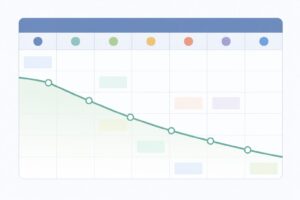
| Goal | Realistic Timeline (at 1–2 lbs/week) |
|---|---|
| Lose 10 lbs | 5–10 weeks |
| Lose 20 lbs | 10–20 weeks |
| Lose 50 lbs | 25–50 weeks (roughly 6–12 months) |
Frequently Asked Questions
Can I lose 10 pounds in a week? Not safely as fat loss. Most rapid short-term loss is water weight. A safe, sustainable rate is 1–2 pounds a week.
What foods help burn belly fat? No single food targets fat in one area of the body. Fiber-rich vegetables and lean protein support an overall calorie deficit, which is what actually drives fat loss, including abdominal fat.
What’s the worst carb for belly fat? Refined carbohydrates and added sugars (white bread, sugary cereal, soda) are more strongly linked to weight gain than complex carbs like oats or whole grains, largely because they’re easy to overconsume.
Will I get saggy skin if I lose 50 pounds? It’s possible, research suggests it becomes more likely above roughly 44 lbs of total loss, especially if the loss happens quickly. A slower pace and strength training may reduce, but won’t eliminate, the likelihood.
Can I lose weight without exercise? Yes, primarily through a calorie deficit via diet. Exercise isn’t required to lose weight, but it supports keeping weight off long-term.
At what age is it hardest to lose weight? Metabolism tends to slow somewhat with age, and hormonal shifts (particularly around menopause) can make weight management more challenging. It remains achievable at any age with the same fundamentals.
Why am I not losing weight even though I’m trying? Common factors include underestimating calorie intake, insufficient protein, a plateau that requires recalculating calorie needs as weight changes, and per CDC guidance insufficient sleep, activity, or stress management.
What is the 30/30/30 rule? A popular framework: 30 grams of protein within 30 minutes of waking, followed by 30 minutes of low-intensity exercise. It’s not a clinically validated formula it’s a habit-building structure some people find easy to follow, but it doesn’t replace an overall calorie deficit.
What is the most weight I can realistically lose in a month? At the standard 1–2 lbs/week guideline, that’s roughly 4–8 pounds a month. Numbers well above that are typically water weight, an unsustainable pace, or both.
The Bottom Line
The habits with the strongest evidence behind them aren’t dramatic: a moderate calorie deficit, enough protein, regular movement, sleep, stress management, and a maintenance plan set up before you need it. For the CDC’s full framework on getting started, their guide on losing weight walks through it step by step.
Weight loss advice doesn’t need to be dramatic to work it needs to be something you can still be doing in six months. Pick one habit from this list, not all ten, and give it a few consistent weeks before adding another. If you’re dealing with a specific health condition, take medication, or are considering a significant weight loss goal, talk to a doctor before changing your diet or activity level this article is general information, not personalized medical advice.
Which of these are you already doing, and which one are you missing? Start there.
Sources