Introduction
What every patient and every provider deserves in a digital health platform
The Doctor Will See You Now Without You Leaving the Couch
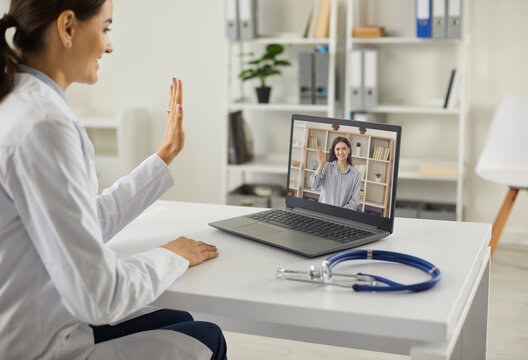
Picture this: It’s a Tuesday morning in January, snow is caking the pavements of Manchester, rush-hour traffic is already gridlocked in Toronto, and a flu season surge has every urgent-care clinic in New York City slammed beyond capacity. In the not-so-distant past, getting medical attention meant suiting up, waiting in a crowded lobby, and hoping you didn’t pick up something worse on the way in. Today, you open an app, tap a button, and a board-certified physician is looking you in the eyes within minutes from the warmth of your living room.
That, in a single scene, is the quiet revolution of telehealth. And the reason it works the reason patients across the US, Canada, and the UK are showing up for virtual appointments at record rates comes down almost entirely to the features of telehealth apps that make the whole experience feel seamless, secure, and genuinely useful.
Research published in the National Library of Medicine confirms that telehealth adoption has dramatically improved access to care, particularly for rural and underserved populations but only when the underlying platform is designed with the right functionality. Because a telehealth app that is clunky, confusing, or insecure isn’t just annoying it actively erodes patient engagement and health outcomes.
So what separates the apps that genuinely transform care from those that collect digital dust? Let’s break it all down.
What Is a Telehealth App And How Does One Actually Work?
Before we unpack the features, let’s set the stage. A telehealth app is a digital platform typically available on a smartphone, tablet, or desktop that enables patients to access healthcare services remotely. Think of it as the bridge between you and clinical care, minus the commute, the waiting room magazines, and the parking nightmare.
Here’s how a modern telehealth app typically works in practice:
- You sign up, verify your identity, and complete a health intake form.
- You browse available providers or get matched automatically based on your needs.
- You schedule or immediately join a live video or chat consultation.
- The clinician reviews your history, conducts an assessment, and if needed, sends prescriptions to your local pharmacy electronically.
- Post-visit summaries, follow-up reminders, and care plans are sent directly to your phone.
Some platforms go further, integrating wearables data, remote monitoring devices, and AI-driven triage tools. But the quality of every one of these touchpoints hinges on features the right features, built right.
Key stat: According to Johns Hopkins Medicine, telemedicine can cut down the cost of healthcare while increasing access to care for people in rural areas and those with mobility limitations.
What Are the Different Types of Telehealth Apps?
Telehealth isn’t a monolith it’s an ecosystem. The four core types of telehealth services power different aspects of remote care:
| Type | Description | Common Use Cases |
|---|---|---|
| Live Video (Synchronous) | Real-time video consultations between patient and provider | General consultations, mental health sessions, specialist referrals |
| Store-and-Forward (Asynchronous) | Medical data sent for later review by a clinician | Dermatology, radiology, second opinions |
| Remote Patient Monitoring (RPM) | Wearable or home devices transmit vitals in real-time | Chronic disease management, post-op care |
| mHealth (Mobile Health) | Apps that support wellness, adherence, and health tracking | Medication reminders, fitness, nutrition |
Most leading telehealth apps today blend two or more of these types, creating a more complete, 360-degree picture of your health rather than a one-off snapshot.
The Must-Have Features of Telehealth Apps That Actually Matter

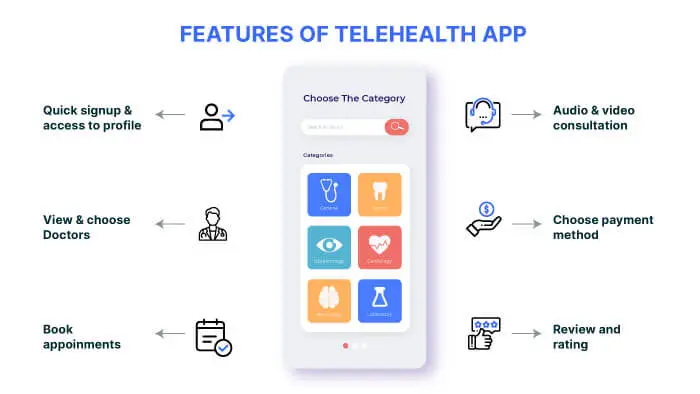
1. HD Video and Audio Consultation Tools
The centerpiece of any telehealth app worth its subscription fee is a high-quality, lag-free video consultation. This isn’t just about convenience clinical accuracy depends on it. A physician assessing a skin rash, checking for jaundice, or evaluating facial palsy needs to see you clearly.
The best platforms offer adaptive video quality that adjusts to your internet connection, echo-canceling audio, and intuitive interfaces that work for an 80-year-old navigating it for the first time and a tech-savvy millennial bouncing between apps.
And yes telehealth does include phones. Most platforms allow voice-only calls as a fallback when video isn’t available or appropriate, ensuring no one is shut out due to technology constraints.
2. Secure, HIPAA-Compliant Messaging
Imagine your medical record casually floating around the internet. Not exactly a comforting thought. Secure messaging is therefore non-negotiable. Every conversation, document, image, and health note exchanged on a telehealth platform must be end-to-end encrypted and compliant with regulatory frameworks HIPAA in the United States, PIPEDA in Canada, and the NHS Digital standards in the UK.
A study in the Journal of Medical Internet Research found that data security and privacy are among the top concerns patients cite when hesitating to adopt telehealth services. Apps that communicate their security protocols clearly and back it up with auditable compliance build far more trust with their users.
3. Electronic Prescriptions and Pharmacy Integration
One of the most powerful features of telehealth apps is the ability to receive an electronic prescription often called an e-Rx directly from your virtual visit, forwarded instantly to a participating pharmacy near you.
This brings us to a question that comes up frequently: can telehealth prescribe oxycodone or other controlled substances? The short answer is: it depends, and it’s complicated. Federally controlled substances (Schedule II drugs like oxycodone or Adderall) are subject to strict DEA regulations in the US, and similar frameworks in Canada and the UK mean that most controlled substances cannot be prescribed via telehealth alone with some exceptions for established patients under specific clinical protocols.
What telehealth can and does very effectively prescribe includes antibiotics, blood pressure medications, antidepressants (in many cases), and a wide range of non-controlled medications. For Suboxone (used in opioid use disorder treatment), regulatory changes in recent years have allowed some flexibility for established patients, though specific clinical eligibility thresholds still apply.
4. Intelligent Appointment Scheduling
The friction of booking a doctor’s appointment has historically been one of healthcare’s most deeply unsexy problems. Telehealth apps that solve it elegantly with real-time provider availability, instant booking, calendar sync, automated reminders, and smart rescheduling remove one of the biggest barriers to consistent care.
Look for platforms that offer on-demand appointments (zero wait) alongside scheduled sessions for non-urgent matters. The best apps also use AI to match you with the right specialist based on your intake form, eliminating the guesswork of “who do I see for this?”
5. Integrated Electronic Health Records (EHR)
A telehealth app operating in isolation from your broader health history is a bit like trying to assemble furniture with no instructions and missing parts. EHR integration means your virtual provider can access your allergies, current medications, prior diagnoses, lab results, and vaccination history creating a complete clinical picture in real time.
This is especially critical for patients managing chronic conditions or navigating care across multiple providers. Continuity of care is what separates a good outcome from a missed one.
6. Remote Patient Monitoring (RPM) Compatibility
Here’s where telehealth gets genuinely exciting. Remote patient monitoring tools think connected glucometers, blood pressure cuffs, pulse oximeters, and cardiac monitors transmit real-time data directly to your care team. The implications for chronic disease management are enormous.
Research published in PMC (National Library of Medicine) demonstrates that RPM-enabled telehealth platforms significantly improve outcomes for patients with conditions like heart failure, COPD, and diabetes by enabling earlier clinical intervention before a crisis develops.
Telehealth apps that integrate seamlessly with wearables Apple Watch, Fitbit, Garmin, and others extend this monitoring into daily life, giving clinicians a richer dataset to work from.
7. AI-Powered Symptom Checker and Triage
Think of the AI symptom checker as your digital triage nurse available at 3 AM, never rushed, never impatient. You input your symptoms, and the system guides you toward the appropriate level of care: self-care at home, a virtual consult, an urgent care visit, or a 911 call.
Done well, this feature reduces unnecessary ER visits, cuts patient wait times across the system, and ensures that the people who need urgent care get it faster because the system isn’t clogged with lower-acuity cases that could have been handled virtually.
8. Multi-Lingual Support and Accessibility Features
Healthcare should not come with a language barrier. Leading telehealth apps in the US, Canada, and UK all of which serve diverse multilingual populations are building in real-time language support, ASL interpretation, text-to-speech functionality, and screen-reader compatibility.
Accessibility isn’t just a nice-to-have; in many jurisdictions, it’s a legal requirement. But beyond compliance, it’s fundamentally about ensuring that a great telehealth experience is available to everyone not just those who happen to speak English fluently and own the latest smartphone.
9. Mental Health and Behavioral Health Tools
Mental health care has been one of telehealth’s biggest success stories. Platforms like Talkspace, BetterHelp, and dozens of NHS-aligned digital services have expanded access to therapy, psychiatry, and counseling far beyond what in-person care alone could serve. The features that make mental health telehealth work include asynchronous messaging with therapists, mood and journaling trackers, crisis support lines integrated directly into the app, and seamless referral pathways for higher-acuity psychiatric care.
10. Transparent Billing and Insurance Integration
Nothing kills the telehealth experience like a surprise bill. Platforms that display cost estimates before a visit, show which services are covered under your insurance plan (whether that’s Aetna in New York, OHIP in Ontario, or the NHS in Birmingham), and process claims automatically are far more likely to retain engaged patients over the long term.
For the uninsured or underinsured, clear cash-pay pricing ideally with sliding scale options builds the kind of trust that keeps patients coming back rather than avoiding care because they’re afraid of the bill.
What Are the Benefits of Using a Telehealth App?

The case for telehealth isn’t just theoretical the evidence base is robust and growing. Here’s how the right features of telehealth apps translate into real, tangible benefits:
| Benefit | What It Means for You | Evidence-Backed? |
|---|---|---|
| Expanded Access | Care for rural, mobility-limited, and underserved patients | Yes |
| Cost Reduction | Lower out-of-pocket costs and reduced healthcare system burden | Yes |
| Time Efficiency | No commute, no waiting rooms appointments fit into real life | Yes |
| Chronic Disease Management | Regular monitoring without constant in-person visits | Yes |
| Mental Health Access | Therapy and psychiatry on demand, without stigma barriers | Yes |
| Continuity of Care | Consistent, documented follow-up through integrated EHR | Yes |
| Patient Empowerment | Access to health data, records, and education in one place | Yes |
According to Johns Hopkins Medicine, telemedicine is especially beneficial for people managing chronic conditions, those seeking specialist care in rural areas, and patients with limited mobility providing significant convenience without sacrificing quality of care.
What Are the 4 P’s of the Telehealth Framework?
If you’re building or evaluating a telehealth platform whether you’re a health system, a startup, or a savvy patient doing your due diligence the 4 P’s of the telehealth framework offer a useful lens:
- Provider — The clinician’s experience must be as seamless as the patient’s. Tools for documentation, prescription management, and case handoff matter enormously.
- Patient — Intuitive UX, clear communication, and low friction at every touchpoint drive engagement and adherence.
- Platform — The technology stack must be reliable, compliant, scalable, and secure.
- Policy — Regulatory compliance across jurisdictions (HIPAA, PIPEDA, NHS Digital standards) is non-negotiable.
Apps that score highly across all four dimensions are the ones that survive and scale. Those that optimize for only one say, a gorgeous UI but weak security tend to plateau fast.
What Are the Five Basic Requirements for Telemedicine?
Strip away the bells and whistles, and any functional telemedicine platform needs these five essentials:
- Reliable Connectivity — High-speed internet access for both patient and provider. Adaptive bandwidth management is a must.
- Secure Communication Infrastructure — End-to-end encryption, multi-factor authentication, and data sovereignty compliance.
- Clinical Tools — EHR integration, e-prescribing, lab ordering, and imaging review capabilities.
- Patient Identification and Authentication — Verified identity to prevent fraud and ensure the right records attach to the right person.
- Reimbursement Infrastructure — Insurance claim processing, out-of-pocket billing, and audit-ready documentation.
How Features of Telehealth Apps Drive Patient Engagement

Patient engagement is the holy grail of modern healthcare and telehealth is increasingly the vehicle for achieving it. As DrCare247 notes, increasing patient engagement in telehealth requires removing friction from every touchpoint: easy onboarding, intuitive scheduling, clear communication, and robust follow-up.
The features that move the needle most on engagement include:
- Push Notifications and Reminders — Appointment alerts, medication reminders, and lab result notifications keep patients connected to their care between visits.
- Patient Portal with Health History — When patients can review their own records, test results, and visit summaries, they feel informed and involved. Informed patients are engaged patients.
- Post-Visit Follow-Up — Automated care plan delivery, satisfaction surveys, and check-in messages after a visit close the loop and dramatically improve adherence.
- Educational Content — Condition-specific resources, wellness tips, and preventive care guidance embedded in the app keep it a daily companion, not just an appointment booking tool.
Did you know? The 20/20/20 rule in telehealth refers to a standard of digital eye fatigue management take a 20-second break every 20 minutes, looking at something 20 feet away. Providers and patients both benefit from this guidance during extended telehealth sessions.
Can Telehealth Help With a Sore Throat, Flu, or Other Common Conditions?
This is probably the most practical question patients have and the answer is a resounding yes, with nuance. Telehealth is extraordinarily effective for diagnosing and managing a wide range of everyday conditions, including:
| Condition | Can Telehealth Help? | Notes |
|---|---|---|
| Sore throat / Strep | Yes | Visual assessment + symptom history often sufficient; rapid strep test may be ordered |
| Flu / Cold symptoms | Yes | Can diagnose and prescribe Tamiflu or antivirals if appropriate |
| Ear infections | Yes | Many providers use patient-held otoscopes for remote ear exams |
| Skin conditions | Yes | Images sent asynchronously for dermatology review |
| Chest infections | Limited | May require in-person auscultation or X-ray |
| Cough (persistent) | Yes | Initial assessment; escalation if red flags present |
| Mental health concerns | Yes | Full therapy and psychiatry services available |
The 7-day rule in telehealth refers to a guideline used by some platforms where a follow-up visit is recommended if symptoms persist beyond one week of initial treatment a built-in safety net that good apps automate through follow-up reminders.
The Honest Take: Pros and Cons of Telemedicine
No technology is perfect and telehealth is no exception. Here’s a balanced look:
| Pros | Cons |
|---|---|
| Dramatically expanded access to care | Not suitable for emergencies or complex physical exams |
| Reduced costs for patients and healthcare systems | Technology barriers for some older or lower-income patients |
| Eliminates geographical barriers | Variable reimbursement policies across jurisdictions |
| Higher patient satisfaction scores in many studies | Risk of fragmented care without proper EHR integration |
| Faster time-to-treatment for many conditions | Prescription limitations for controlled substances |
| Reduced exposure to contagious illnesses | Privacy concerns if security standards are not met |
The good news? Most of the cons on that list are addressable through you guessed it better app features. Robust security, accessibility tools, clear prescription policies, and tight EHR integration turn weaknesses into strengths.
What Are the Advantages of Telenursing And the Tools Behind It?
Telenursing is one of telehealth’s most underrated pillars. Registered nurses operating through telehealth platforms serve as triage coordinators, care educators, medication adherence coaches, and chronic disease monitors often handling patient loads that would be impossible in a traditional clinical setting.
The tools that make telenursing work include secure messaging platforms, remote monitoring dashboards, clinical decision-support software, and virtual patient queues that allow nurses to coordinate care across dozens of patients simultaneously.
The advantages? Faster response times, better patient education, reduced physician workload, and improved outcomes for high-volume chronic disease populations. In Canada and the UK in particular, where primary care access can be stretched thin, telenursing is increasingly filling critical gaps.
Frequently Asked Questions About Telehealth App Features
Who benefits most from telehealth?
The populations who benefit most include patients in rural and remote areas, elderly or mobility-limited individuals, people with chronic conditions requiring regular monitoring, patients with mental health needs, and those seeking specialist care unavailable in their local area. That said, telehealth’s growing feature set means it’s increasingly relevant for virtually anyone looking for more convenient, accessible healthcare.
Do I need an app for telehealth?
Not always some platforms are fully browser-based, requiring only a web link. However, a dedicated app typically offers a richer experience: push notifications, integrated health records, wearable data sync, and smoother video performance. For regular telehealth users, downloading the app is almost always worth it.
What is the most used telehealth platform?
In the US, Teladoc Health is among the most widely used platforms, followed by MDLive, Amwell, and Doctor on Demand. In the UK, the NHS App and platforms like Babylon Health have significant adoption. In Canada, Maple and Dialogue are leading players. The “best” platform depends on your needs, insurance coverage, and clinical requirements.
What equipment do I need for telehealth?
At minimum: a smartphone, tablet, or computer with a camera and microphone, a stable internet connection, and the telehealth app or a web browser. For remote monitoring, you may also need a connected device such as a blood pressure cuff, pulse oximeter, or glucometer many of which can be ordered through the platform itself.
Why are some doctors not doing telehealth anymore?
Some providers have pulled back due to reimbursement uncertainty (particularly in the US, where telehealth parity laws vary by state), concerns about diagnostic limitations without physical examination, and platform fatigue from poorly designed tools. However, the overall trajectory remains strongly toward telehealth adoption, with improving regulations and better technology addressing most of these concerns.
The Takeaway: Features Are the Foundation of Better Health
Here’s the elegant truth about telehealth: the technology itself isn’t magic. The magic happens when the right features come together in a platform that is beautifully designed, rigorously secure, clinically robust, and genuinely easy to use for an 18-year-old managing anxiety in London, a 65-year-old monitoring heart disease in rural Ontario, and a busy professional in New York trying to squeeze a GP visit into a lunch break.
The features of telehealth apps we’ve explored here from HD video consultations and AI triage to remote monitoring and transparent billing are not a wishlist. They are the baseline for what modern digital healthcare should deliver. And as the technology matures, the bar will only rise.
Whether you’re evaluating a telehealth platform for your own care, building one for your organization, or simply trying to make sense of a rapidly evolving landscape, the features are your map. Know what to look for, insist on the essentials, and you’ll find that the future of healthcare is already available and it fits in your pocket.
Ready to explore telehealth options? Whether you’re in the US, Canada, or the UK, look for platforms that combine clinical quality, data security, and an experience designed around you not around provider convenience. Your health deserves nothing less.