Introduction

There’s a particular kind of exhaustion that sleep can’t fix. You wake up already tired. You check your emails with a hollow sense of dread. The things that once sparked something in you the project, the promotion, the hustle now feel like a leaden weight on your chest. If that sounds uncomfortably familiar, you might not just be having a rough week. You might be burning out.
Burnout is no longer a fringe concept whispered among overworked executives. It’s a clinically recognized phenomenon one that affects millions of professionals across the United States, Canada, and the United Kingdom every single year. And the troubling reality? Most people push through it rather than address it, which only makes things worse.
The good news is that burnout recovery is possible not just manageable, but genuinely achievable. But it requires more than a weekend off or a wellness app. It demands strategy, self-awareness, and the willingness to make real changes. Here are seven evidence-backed strategies that can help you find your way back.
First, Let’s Talk About What You’re Actually Dealing With
What Does Full-Blown Burnout Actually Look Like?
Burnout isn’t merely feeling stressed. According to the Mayo Clinic, burnout is a state of physical and emotional exhaustion, often accompanied by cynicism and a sense of ineffectiveness a creeping feeling that nothing you do matters or makes a difference.
Full-blown burnout can look like this:
- Chronic fatigue that doesn’t improve with rest
- Emotional detachment from your work, colleagues, or even loved ones
- Cognitive fog difficulty concentrating, making decisions, or completing tasks
- Physical symptoms including frequent headaches, gastrointestinal problems, and lowered immunity
- Loss of satisfaction in achievements that once felt meaningful
- Increased cynicism or irritability toward people and situations you used to handle with ease
And here’s the kicker: burnout doesn’t arrive overnight. It creeps in through the back door, disguised as dedication.
What Are the 7 Signs of Burnout?
Before we can talk about recovery, it helps to identify exactly where you are. Mental Health America outlines the key warning signs of burnout as including emotional exhaustion, physical depletion, cognitive difficulties, depersonalization (feeling detached from yourself or your work), reduced sense of personal accomplishment, increased cynicism, and behavioral changes like withdrawing from responsibilities or people.
Sound familiar? Then read on.
The 12 Stages of Burnout: How Far Gone Are You?
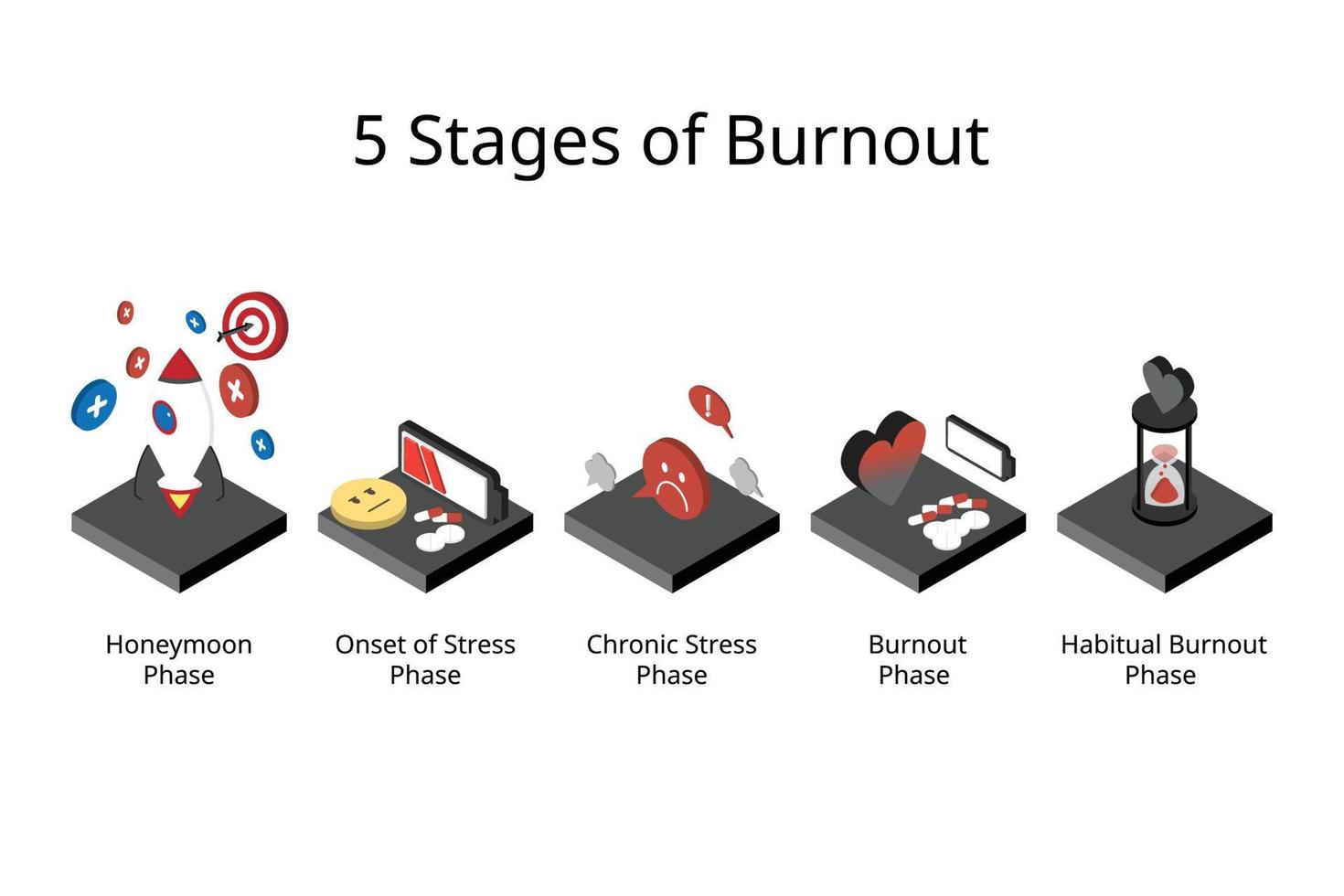
Burnout doesn’t happen in one dramatic moment. Psychologists Herbert Freudenberger and Gail North identified up to 12 progressive stages, beginning with an initial compulsion to prove yourself and escalating through neglecting personal needs, denying problems, social withdrawal, behavioral changes, depersonalization, and at the final stage complete physical and mental breakdown.
Knowing where you fall on this spectrum matters enormously. Someone in Stage 3 needs a very different intervention than someone at Stage 11. If you suspect you’re in the later stages, please consider reaching out to a healthcare professional without delay. Burnout at advanced stages can lead to serious mental health consequences, including depression and, in severe cases, complete mental breakdown.
What Are the 4 Types of Burnout?
Not all burnout is created equal. Research suggests there are four primary types, each with its own texture and triggers:
| Type | Primary Cause | Core Experience |
|---|---|---|
| Overload Burnout | Working excessively to achieve success | Frantic energy followed by collapse |
| Under-Challenged Burnout | Boredom, lack of stimulation or growth | Apathy and disengagement |
| Neglect Burnout | Feeling helpless and unsupported | Hopelessness and incompetence |
| Wear-and-Care Burnout | Emotional demands of caregiving or service work | Compassion fatigue and emotional depletion |
Understanding your type is the first step toward targeted, effective recovery.
What Is the 42% Rule for Burnout?
If you’ve been deep in the burnout rabbit hole, you may have come across the so-called “42% rule.” While not a clinical standard, it emerged from research suggesting that when professionals operate consistently above approximately 42 hours per week without adequate recovery, their productivity and mental health begin to deteriorate at a measurable rate. The rule is a useful reminder that there’s a point of diminishing returns with effort and that rest isn’t laziness; it’s a biological necessity.
Working beyond your natural capacity isn’t a badge of honor. It’s a fast track to a breakdown.
The 3 R’s of Burnout: Your Recovery Framework
Before we dive into the specific strategies, here’s a foundational framework worth committing to memory the 3 R’s of Burnout Recovery: Recognize, Reverse, and Resilience.
- Recognize the warning signs before they escalate
- Reverse the damage through deliberate rest, support, and lifestyle changes
- Build Resilience by developing sustainable habits and boundaries that prevent recurrence
Think of these not as a one-and-done checklist, but as an ongoing relationship with your own wellbeing.
7 Effective Strategies for Burnout Recovery
Strategy 1: Prioritize Genuine Rest Not Just Sleep
Here’s something that might surprise you: burnout recovery requires more than simply sleeping more. When your nervous system is in a chronic state of stress activation, quality sleep becomes harder to achieve and even when you get it, the restoration it offers is incomplete.
True rest, according to researchers at Cleveland Clinic, encompasses multiple dimensions beyond physical rest. These include:
- Mental rest (stepping away from cognitive demands and information overload)
- Sensory rest (reducing screen time, noise, and overstimulation)
- Creative rest (allowing your mind to wander without agenda)
- Social rest (spending time with people who restore rather than drain you)
- Emotional rest (giving yourself permission to feel without performance)
The prescription here isn’t a nap it’s a complete audit of how you’re spending your downtime. If your “relaxation” involves scrolling social media or catching up on emails in the evening, your nervous system isn’t actually recovering.

Strategy 2: Set Boundaries Without Apology
Here’s a hard truth: burnout often has an accomplice, and that accomplice is your inability to say no.
Boundary-setting isn’t about being difficult or uncooperative. It’s about understanding your capacity, communicating it clearly, and protecting it without guilt. The research on burnout recovery consistently shows that individuals who establish firm work-life boundaries recover significantly faster than those who continue to overextend themselves.
Practical boundary moves:
- Define your “off” hours and enforce them with the same commitment you’d give a client deadline
- Learn the art of the graceful no — “I’d love to help, but I don’t have the bandwidth right now”
- Communicate with your manager about workload if it’s unsustainable frame it as a performance conversation, not a complaint
- Create a physical transition between work and home life, even if you work remotely (a short walk, a change of clothes, a ritual that signals “work is done”)
Boundaries are not walls. They are the perimeter of your self-respect.
Strategy 3: Reconnect With Your Body
One of the first casualties of burnout is the body-mind connection. You stop noticing hunger cues. Exercise disappears from the schedule. You exist from the neck up, powered by caffeine and cortisol.
Burnout can absolutely make you physically ill. The chronic stress response suppresses immune function, elevates inflammation, disrupts hormonal balance, and contributes to cardiovascular risk. This isn’t a metaphor it’s physiology.
When it comes to the question of what exercise is best for burnout, research consistently points to moderate-intensity movement rather than high-intensity training. When your system is already taxed, intense workouts can add to your stress burden rather than alleviating it. Instead, consider:
- Walking — particularly in natural environments (studies show green spaces reduce cortisol measurably)
- Yoga and stretching — activates the parasympathetic “rest and digest” system
- Swimming — rhythmic, low-impact, and deeply calming for the nervous system
- Tai chi or qigong — gentle, meditative movement with documented stress-reduction benefits
The goal in the early stages of burnout recovery isn’t peak performance. It’s gentle reawakening.

Strategy 4: Rebuild Meaning and Purpose
Here’s what distinguishes burnout from ordinary tiredness: burnout hollows out your sense of meaning. You’re not just physically depleted; you feel disconnected from the why behind what you do.
Reconnecting with purpose is one of the most powerful and most overlooked components of burnout recovery. According to a comprehensive review published in PMC/NCBI, burnout is fundamentally a mismatch between person and job, and addressing that mismatch at the level of values and meaning produces more durable recovery outcomes than symptom management alone.
This doesn’t necessarily mean quitting your job (though sometimes it does). It means asking some honest questions:
- What aspects of your work once gave you genuine satisfaction?
- Have those aspects diminished, or has your relationship with them changed?
- What would “enough” look like for you professionally and personally?
- Are there values you’re currently living in contradiction to?
Journaling, therapy, or even deep conversations with trusted mentors can help surface these answers. The goal is not to find grand cosmic meaning overnight but to reintroduce small doses of authentic purpose into your daily life.
Strategy 5: Seek Social Support (The Right Kind)
Burnout has a nasty social side effect: it makes you withdraw from the people who could help you most. Exhaustion breeds isolation, and isolation breeds more exhaustion. It’s a loop that can be difficult to break without intentional effort.
But not all social interaction is created equal. Time spent with people who expect performance, who drain your energy, or who minimize your struggle is not restorative it’s depleting. Burnout recovery calls for intentional social connection: time with people who make you feel seen, accepted, and genuinely relaxed.
Consider:
- Therapy or counseling — a professional relationship specifically designed for processing and healing
- Peer support groups — particularly valuable for those in high-pressure professions (healthcare workers, lawyers, first responders, teachers)
- Close friendships — the ones where you can say “I’m not okay” without explanation
- Mentors or coaches — who can help you navigate professional reconfiguration from a place of experience
It’s also worth noting that workplace culture plays a significant role in burnout. If your organization’s environment is fundamentally toxic characterized by excessive demands, lack of autonomy, poor leadership, or systemic unfairness individual recovery strategies can only take you so far. That’s a conversation worth having, ideally with both a therapist and, when the time is right, with your HR department or leadership.
Strategy 6: Redesign Your Relationship With Work
This strategy is perhaps the most nuanced and the most essential for long-term recovery. You can rest, exercise, meditate, and journal your way to feeling better in the short term, but if you return to the exact same work patterns that caused your burnout, relapse is virtually inevitable.
Can you ever fully recover from burnout? Yes but full recovery requires meaningful change, not just rest. The question isn’t just “how do I feel better?” but “how do I restructure my work life so this doesn’t happen again?”
Some evidence-based approaches to work redesign include:
- Job crafting — proactively shaping your role to emphasize tasks that align with your strengths and values
- Negotiating workload — having an explicit conversation with management about sustainable expectations
- Taking formal time off — particularly for those in advanced stages; a medical leave of absence is a legitimate and often necessary tool
- Exploring role transitions — whether that means a lateral move, a reduced schedule, or a career pivot
For professionals wondering how much time off they need to recover from burnout, the honest answer is: it depends on how severe your burnout is. Mild-to-moderate burnout might require weeks; severe burnout can take months to years of sustained recovery effort. Don’t set a timeline that mirrors a sick day burnout is more like a stress fracture than a cold.

Strategy 7: Build Long-Term Resilience Through Preventive Practices
Recovery from burnout is not the finish line. It’s the starting point for building a life that’s more resistant to future depletion. Resilience isn’t about becoming invulnerable it’s about developing the habits, relationships, and self-awareness that allow you to absorb inevitable stress without letting it hollow you out.
Evidence-backed resilience practices include:
Mindfulness and meditation. Even ten minutes of daily mindfulness practice has been shown to measurably reduce cortisol levels and improve emotional regulation. The key is consistency, not duration.
Regular digital detoxes. Constant connectivity is one of the most underappreciated drivers of modern burnout. Designating tech-free hours especially in the morning and evening creates breathing room for your nervous system.
Sleep hygiene. Not just quantity, but quality. Consistent sleep and wake times, a cool and dark sleep environment, and no screens in the hour before bed are among the most evidence-supported ways to improve restorative sleep.
Proactive scheduling of joy. This sounds almost embarrassingly simple, but it’s profoundly effective. Deliberately scheduling activities that bring genuine pleasure not productive leisure, not optimized relaxation, just things you genuinely enjoy is a non-negotiable component of sustained wellbeing.
Regular self-check-ins. Build the habit of asking yourself, monthly, “How am I actually doing?” not just “Am I keeping up?” Recognizing early warning signs before they escalate is far easier than managing a full-blown burnout episode.
How Long Should It Take to Recover From Burnout?
One of the most common questions people ask and one of the most anxiety-inducing is: how long does this actually take?
Here’s the honest answer: burnout recovery is not linear, and it’s not quick. Research suggests:
| Severity Level | Typical Recovery Timeline |
|---|---|
| Mild burnout | 1–3 months with proper rest and lifestyle adjustment |
| Moderate burnout | 3–6 months, often including professional support |
| Severe burnout | 6 months to 2+ years, potentially requiring medical leave |
| Chronic burnout | Years of sustained recovery; may permanently alter relationship with work |
The good news is that you know burnout is over when you begin to feel genuinely energized by your work again not just functional, but engaged. When curiosity replaces dread. When rest feels restorative rather than inadequate. These are the signs you’re on the right side of the curve.
What to Do When You Can’t Cope Anymore
If you’ve arrived at a point where functioning feels impossible where the exhaustion has become so severe that everyday tasks feel insurmountable, or where your mental health is significantly compromised please know that this is not weakness. It is a medical situation that deserves medical attention.
Contact your primary care physician, a mental health professional, or your employee assistance program (EAP) if your employer provides one. In the UK, resources like the NHS mental health services and organizations like Mind (mind.org.uk) offer accessible support. In Canada and the US, therapists, psychologists, and psychiatrists who specialize in occupational stress and burnout are available through most health insurance networks.
You don’t have to white-knuckle your way back. Asking for help is not a detour from recovery it is recovery.
Frequently Asked Questions About Burnout Recovery
Is burnout considered a disability? While burnout itself is not classified as a disability in most jurisdictions, severe burnout can contribute to conditions like depression and anxiety that may qualify for disability accommodations or medical leave. Consult with your HR department and a healthcare provider to understand your specific rights and options.
How do I prove I have burnout? Burnout is typically diagnosed through clinical assessment by a healthcare professional, who will evaluate your symptoms, their duration, and their impact on your daily functioning. Keeping a journal documenting your symptoms and their effect on your work and personal life can be helpful when seeking a diagnosis.
Can burnout last five years or more? Unfortunately, yes particularly if the underlying causes are not addressed and proper recovery is not pursued. Untreated or inadequately treated burnout can become chronic, profoundly affecting quality of life, career trajectory, and physical health over the long term. This is why early intervention is so critical.
What’s worse than a burnout? Ignoring burnout is considerably worse than experiencing it. Untreated burnout can escalate to clinical depression, anxiety disorders, cardiovascular issues, and — in the most severe cases — complete psychological breakdown. The body and mind will eventually force the rest you’ve been refusing to take, often in ways that are far more disruptive and harder to recover from.
The Bottom Line
Burnout is not a personal failing. It’s not a sign that you’re not tough enough, committed enough, or resilient enough. It’s a physiological and psychological response to sustained, unmanaged stress and it is extraordinarily common among driven, capable people.
But here’s what’s equally true: burnout recovery is real. The path back to a life that feels meaningful, energized, and genuinely sustainable exists and it begins with taking the first honest step toward acknowledging what’s happening and deciding to do something about it.
You don’t have to earn your way back to wholeness. You don’t have to perform recovery or optimize your rest. You just have to start with one boundary, one good night’s sleep, one conversation, one walk, one moment of genuine stillness.
The version of you that exists on the other side of burnout isn’t weakened by the experience. Done right, that version is wiser, clearer, and far less likely to lose themselves in the chase again.
That’s worth working toward.
Want to share your burnout recovery journey or have questions about where to start? Drop a comment below this conversation matters, and you don’t have to have it alone.