Introduction
Imagine waking up with a nagging ache or a sudden fever and, instead of bracing for a two-hour wait in a cold clinic, you’re speaking to a top-tier specialist from your sofa in minutes. In 2026, the digital health revolution hasn’t just arrived it has matured into a sophisticated ecosystem where your smartphone is the front door to the world’s best medical minds.
But with thousands of apps screaming for your attention, the real challenge isn’t finding a doctor it’s finding the right one without compromising your privacy, your data, or your wallet. This is your masterclass in navigating the modern medical landscape.
Why Choosing the Right Online Health Service is More Critical Than Ever
For decades, healthcare was a brick-and-mortar game. You went where the nearest hospital was, regardless of whether they were the best fit for your specific needs. Today, telehealth services for patients have shattered those geographical barriers.
According to the American Hospital Association, telehealth is now a routine way for patients to access care, with 2026 data showing that over 90% of U.S. hospitals now offer some form of virtual care. However, this explosion in choice brings a burden of vetting. If you don’t know how to choose an online health service correctly, you risk more than just a bad user experience; you risk your medical outcomes.

1. Defining Your Medical Needs: The Triage Phase
Before you even open a search engine, you must be clear about what you are looking for. Not all platforms are created equal. In 2026, the market has bifurcated into “Generalist” and “Micro-Specialist” platforms.
Primary Care vs. Acute Urgent Care
Are you looking for a one-off prescription for a sinus infection, or do you need long-term management for a chronic condition like hypertension?
-
Acute Issues: Look for “on-demand” services like MDLIVE or Amwell that offer 24/7 access with minimal wait times.
-
Chronic Care: Look for platforms like Teladoc Health that assign you a dedicated primary care provider (PCP) to ensure continuity.
The Rise of Specialized Telehealth
If you have a specific concern, a generalist might not suffice.
-
Mental Health: Platforms like BetterHelp and Talkspace specialize in ongoing therapy.
-
Dermatology: Services like Apostrophe or Curology use high-res photo uploads for asynchronous diagnosis.
-
Fertility and Women’s Health: Maven Clinic has become a leader in 2026 for family-building support.
2. Security and Privacy: The “Safety First” Protocol
When you go digital, your medical history becomes data. Protecting that data is the most critical step in learning how to choose an online health service.
HIPAA Compliance and Beyond
In the United States, HIPAA compliance is the baseline, but 2026 standards demand more. Leading platforms now use AES-256 bit encryption and mandatory Multi-Factor Authentication (MFA).
-
Check the Footer: Look for a HIPAA badge or a SOC2 Type II certification.
-
Data Portability: Can you easily export your records to your local hospital? Avoid “data silos” that keep your medical history trapped in one app.
Verifying Provider Credentials
Don’t just take the platform’s word for it. A reputable service should allow you to verify their clinicians via the Federation of State Medical Boards (FSMB).
Expert Insight: In 2026, many platforms use AI-driven credentialing to monitor doctor licenses in real-time across multiple states. If a platform can’t explain their verification process, it’s a red flag.
3. The 2026 Comparison: Top Telehealth Services for Patients
To help you navigate the crowded market, we’ve analyzed the current leaders based on cost, speed, and clinical depth.
Telehealth Platform Comparison Table
| Feature | Teladoc Health | Zocdoc | Sesame Care | Amwell |
| Best For | Comprehensive Care | Finding Local Docs | Uninsured / Cash Pay | Hospital-Linked Care |
| Price Model | Insurance / Monthly | Free to Use | Upfront Cash Pricing | Insurance-First |
| Wait Time | < 15 Minutes | Varies (Scheduled) | Immediate to 24h | < 20 Minutes |
| Device Sync | Apple/Fitbit/Dexcom | Minimal | Manual Entry | Integrated Sensors |
| Specialties | All Major | All Major | Primary & Dental | Acute & Behavioral |
4. Understanding the Cost: Navigating Insurance and Parity Laws
One of the biggest hurdles in how to choose an online health service is the confusing world of billing. In 2026, “Payment Parity” laws have changed the game.
What is Payment Parity?
Many states now require insurers to reimburse for telehealth at the same rate as in-person visits. However, this isn’t universal.
-
Check your 2026 Plan: Most plans now have a specific “Virtual Care” co-pay that might be lower than your standard co-pay.
-
HSA/FSA Eligibility: Almost all major platforms now accept these funds.
-
Cash-Pay Transparency: If you are uninsured, platforms like Sesame offer “direct-to-consumer” pricing that bypasses the insurance middleman entirely.
5. The “Tech Friction” Audit: Evaluating User Experience
A doctor can be a world-renowned expert, but if their app crashes during a critical moment, the care is compromised. When evaluating telehealth services for patients, test the “Tech Friction” factor before you pay.
Must-Have Platform Features for 2026:
-
Asynchronous Messaging: Can you text your doctor follow-up questions for 24 hours after the call?
-
Integrated Pharmacy: Does the app automatically find the lowest price for your meds using tools like GoodRx?
-
Language Support: Leading platforms now offer real-time AI translation or live interpreters in 100+ languages.
6. The 2026 Regulatory Landscape: State Lines and Controlled Substances
A major part of knowing how to choose an online health service involves understanding where your doctor is actually located.
The Interstate Compact
By 2026, many states have joined the Interstate Medical Licensure Compact (IMLC). This allows a doctor in New York to legally treat a patient in Texas.
-
Prescription Limitations: Be aware that the DEA has specific rules regarding the prescription of controlled substances (like certain ADHD medications) via telehealth. As of 2026, an in-person visit is often required once a year for these specific cases.
7. Deep Dive: State-by-State Variations in 2026
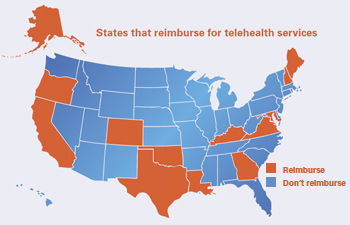
When you are looking into how to choose an online health service, where you live matters just as much as who you see. As of early 2026, 24 states have mandated full “payment parity,” but the remaining 26 still allow insurers to pay less for a video call than a physical office visit.
High-Parity States (Best for Patients)
States like California, Georgia, and Washington have some of the most robust protections. In these regions, you can expect your telehealth experience to be financially identical to an in-person one.
The “Contract Negotiation” States
States like Florida and Michigan do not explicitly require coverage parity. If you live here, you must be more vigilant. Always call your insurer and ask: “Is my virtual visit covered at 100% of the in-person rate?”
8. Remote Patient Monitoring (RPM): The Next Frontier
In 2026, choosing an online health service isn’t just about a 15-minute video call; it’s about Remote Patient Monitoring. This technology allows your doctor to monitor your vitals in real-time between appointments.
Why RPM Matters for You:
-
Proactive Intervention: If your blood pressure spikes at 2 AM, the service’s AI can alert a nurse to call you immediately.
-
Reduced Hospitalization: Studies in 2025 showed that RPM reduces hospital readmissions by nearly 50% for heart failure patients.
-
Personalized Data: Instead of one blood sugar reading every three months, your doctor sees a continuous graph of your metabolism.
9. Evaluating “Digital Bedside Manner”
A doctor’s credentials (MD, DO, NP) are the foundation, but their “Digital Bedside Manner” is what makes or breaks the patient experience. When vetting telehealth services for patients, look for these soft skills:
-
Eye Contact: Does the doctor look at the camera (simulating eye contact) or are they constantly typing and looking away?
-
Patience with Tech: A good provider shouldn’t get frustrated if your audio cuts out for a second.
-
Clarity of Instruction: Do they provide a written summary in the app immediately after the call?
10. How to Prepare for Your Virtual Appointment
Once you’ve mastered how to choose an online health service, you need to ensure the encounter is successful. Virtual medicine is a partnership.
The “Virtual Patient” Checklist:
-
Vital Signs: If you have a smartwatch or home blood pressure cuff, have your readings ready.
-
Lighting: Sit facing a natural light source so the doctor can assess skin tone or throat inflammation.
-
Medication List: Have all your current supplements and prescriptions within reach.
-
Quiet Zone: Ensure you have a private, quiet space to discuss sensitive health matters.
11. Red Flags: When to Close the Tab
Not every service is looking out for your health. Some are “pill mills” designed to push specific, high-cost medications.
-
Red Flag 1: Guaranteed Rx. If a site promises you a script before you’ve even spoken to a doctor, leave immediately.
-
Red Flag 2: No Video. If a platform only offers text-based care for complex issues, they are cutting corners.
-
Red Flag 3: Aggressive Upselling. Medicine shouldn’t feel like a high-pressure sales pitch for supplements or “wellness packages.”
12. The Role of AI in 2026 Telehealth
As you look at how to choose an online health service, you’ll notice AI everywhere. From symptom checkers to “ambient scribing,” AI is the invisible assistant in the room.
How AI Benefits You:
-
Triage: AI can tell you if your symptoms require an immediate ER visit or can wait for a virtual consult.
-
Efficiency: AI scribes handle the paperwork, letting the doctor focus 100% of their attention on your face and voice.
-
Predictive Health: Advanced platforms now use AI to analyze your wearable data (sleep, heart rate) to spot trends before you even feel sick.

13. Case Study: Choosing a Service for Mental Health vs. Urgent Care
To truly understand how to choose an online health service, let’s look at two common scenarios.
Scenario A: The Sudden Rash (Urgent Care)
For a rash, speed and image quality are paramount. You should choose a service like Virtuwell or Amwell. You need a platform that allows high-resolution photo uploads before the call so the doctor can zoom in on the skin texture.
Scenario B: Managing Anxiety (Behavioral Health)
For mental health, continuity is the most important factor. Avoid “one-off” platforms. Choose a service like Talkspace or Grow Therapy where you can select a specific therapist and see them every week for months.
14. Global Perspectives: Telehealth Beyond the U.S.
If you are a digital nomad or traveling, how to choose an online health service becomes an international puzzle.
-
The UK (NHS Digital): If you are in the UK, the NHS app is the gold standard, offering free consultations but with potentially longer wait times.
-
Asia-Pacific: Platforms like Doctor Anywhere or Yo!Coach power massive healthcare marketplaces that connect patients with specialists across time zones.
15. The Final Verdict: The 5-Step Selection Process
To wrap up, here is the foolproof way to choose your next provider:
-
Verify Insurance/Budget: Determine if you are using co-pay or cash-pay.
-
Match the Specialty: Don’t go to a generalist for a specialized skin issue.
-
Check Credentials: Ensure the doctors are board-certified in your country/state via the FSMB.
-
Test the Tech: Download the app and check the interface before booking.
-
Read Recent Reviews: Look for feedback from the last 3–6 months to gauge current service levels.
FAQ: Frequently Asked Questions about Online Health Services
Can an online doctor give me a work note?
Yes. Most reputable telehealth services for patients can provide digitally signed excuses for work or school if they deem it medically necessary during the visit.
What if I need a blood test or X-ray?
Your online provider will send a digital lab order to a local facility like Quest Diagnostics or LabCorp. You go in for the test, and the results are automatically uploaded to your telehealth portal.
Is my data safe if the company goes bankrupt?
In 2026, strict “Data Custodianship” laws require health platforms to have a plan for transferring or deleting records in the event of a business closure. Always check the “Data Retention” section of the privacy policy.
Can I use telehealth for emergencies?
No. If you are experiencing chest pain, severe bleeding, or difficulty breathing, call emergency services immediately. Telehealth is for non-emergent care.
Can online doctors prescribe any medication?
No. Most online doctors cannot prescribe “controlled substances” (like certain painkillers or ADHD medications) due to federal regulations. They focus on maintenance medications, antibiotics, and mental health prescriptions.
Conclusion: Take Charge of Your Digital Health
Learning how to choose an online health service is the most important wellness skill of the decade. By moving beyond mere convenience and looking for clinical quality, data security, and specialized expertise, you turn your smartphone into a powerful tool for longevity.
The future of care is personal, digital, and designed around you. Don’t settle for anything less than a service that treats you like a patient, not a user.
Ready to Upgrade Your Care?
Share Now with a friend who is still sitting in waiting rooms, or Read More of our Online Health Consultations Explained: Advice and Considerations for Patients
Sources & References
- American Hospital Association — Telehealth Adoption Data
- Federation of State Medical Boards — Verify Provider Credentials
- HHS — HIPAA Compliance for Telehealth
- Interstate Medical Licensure Compact — Telehealth Regulations
- NIH — Remote Patient Monitoring Outcomes
- DEA — Telehealth Prescribing Rules for Controlled Substances