Introduction
Finding the right therapist used to mean flipping through a phone book, navigating insurance mazes, and waiting six weeks for an opening. Today, the right therapy platform is a few taps away — but that abundance of choice brings its own kind of paralysis.
There’s a particular kind of mental exhaustion that comes not from a lack of options, but from too many of them. You’ve already done the hard part you’ve decided you want to try therapy. And then you open a browser tab, and suddenly you’re staring at a dozen platforms, each one promising licensed professionals, flexible scheduling, and transformative results. Where do you even begin?
Choosing the right therapy platform is less about finding the “best” one in some universal sense, and more about finding the one that fits you your schedule, your budget, your specific mental health needs, and honestly, your comfort level with technology. Think of it like choosing the right gym: the fanciest facility in the city is useless if it’s 40 minutes away and closes at 7 PM.
This guide is here to cut through the noise. Whether you’re in Denver navigating a busy work week, in Toronto wondering what’s covered under your provincial plan, or in London trying to find something that bridges the gap between NHS waiting lists and private pricing, the framework is the same. Let’s walk through it.

What Are the Signs You Need Therapy — And Is a Platform Right for You?
Before diving into platform features and pricing tiers, it’s worth asking the foundational question: what are the signs you need therapy?
The honest answer is that you don’t need to be in crisis to benefit. Therapy isn’t an emergency room it’s more like a personal trainer for your mental and emotional fitness. That said, some common signals worth paying attention to include:
- Persistent feelings of anxiety, sadness, or emotional numbness that don’t seem to lift on their own
- Difficulty managing stress at work, in relationships, or in daily life
- Sleep disruptions, changes in appetite, or physical symptoms that seem tied to emotional strain
- A sense that you’re cycling through the same patterns in relationships or behaviors
- After a major life transition divorce, job loss, bereavement, relocation you feel stuck
What are 5 early warning signs of mental illness? According to mental health professionals, they often include withdrawal from social activities, extreme mood swings, a decline in self-care, difficulty concentrating, and persistent physical complaints without a clear medical cause.
If you’re nodding along to any of the above, a therapy platform may be exactly the on-ramp you need lower barrier to entry than traditional in-person therapy, and far more accessible for people navigating busy lives.
But there’s an important caveat: online therapy platforms are best suited for mild-to-moderate mental health concerns. If you’re experiencing severe depression, psychosis, active suicidal ideation, or a condition requiring medication management, a psychiatrist or crisis service is a more appropriate first contact.
What Does Doing Therapy Actually Mean? (And How Does It Work Online?)
Let’s demystify it. What does doing therapy mean, exactly?
At its core, therapy is a structured, confidential conversation with a trained mental health professional aimed at helping you understand and shift patterns in your thoughts, feelings, and behaviors. What a therapist does at least a good one is listen without judgment, ask the right questions, and help you develop tools to navigate what’s coming up in your life.
Online therapy works largely the same way, delivered through video calls, phone sessions, or text/messaging formats depending on the platform. Most therapy platforms offer:
- Synchronous sessions: Live video or phone calls with a licensed therapist, typically 45–55 minutes
- Asynchronous messaging: Text-based exchanges where you can write at any time and your therapist responds within a set window (often 24–48 hours)
- Hybrid models: A combination of both
For people who feel more articulate in writing, or who find video calls anxiety-inducing, the messaging format can be a genuine breakthrough. For others, nothing replaces the feeling of a real-time conversation. Knowing your preference before you sign up will save you the frustration of paying for a format that doesn’t suit you.
How Do I Know If I Need Therapy — Or Am I Overreacting?
This is one of the most common questions people ask themselves before reaching out, and it’s worth addressing directly: you are probably not overreacting.
The cultural stigma around seeking therapy the idea that you should only go if something is “seriously wrong” is both outdated and actively harmful. Should you go to therapy even if you feel fine? Yes. Genuinely. Preventive mental health care is as legitimate as going to a dentist before you have a toothache.
A useful internal compass: if something is taking up significant mental real estate, affecting your relationships, or diminishing your quality of life that’s reason enough. You don’t need to justify it with a diagnosis.
For those in Canada, this question often comes with a practical layer: Can you get therapy for free in Canada? The short answer is: sometimes. Publicly funded mental health services exist through provincial health plans, though wait times can be significant. In Ontario, for instance, therapists are not covered under OHIP unless they are employed in a hospital or community health setting which means most Canadians pay out of pocket or through private insurance. Some platforms offer sliding-scale fees or accept extended health benefits, which is worth checking before you commit.
In the UK, the NHS provides therapy through the IAPT (Improving Access to Psychological Therapies) programme, particularly CBT, but wait times vary widely by region. Private therapy platforms can bridge that gap considerably.
The Key Factors to Evaluate in Any Therapy Platform
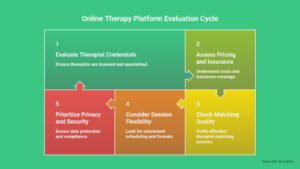
Now to the practical heart of it. Research from OpenMedScience outlines the top factors to consider when evaluating online therapy platforms, and they align well with what most people discover through trial and error. Here’s a consolidated framework:
1. Therapist Credentials and Specialization
This is non-negotiable. Any reputable therapy platform should clearly display the credentials of its practitioners licensed clinical social workers (LCSWs), licensed professional counselors (LPCs), psychologists (PhDs or PsyDs), or marriage and family therapists (MFTs). In Canada, look for Registered Psychotherapists (RPs) or Registered Clinical Counsellors (RCCs). In the UK, check for accreditation with the BACP or UKCP.
Beyond credentials, specialization matters enormously. What therapy is best for trauma? Trauma-informed approaches like EMDR (Eye Movement Desensitization and Reprocessing) or somatic therapy are evidence-based for PTSD and complex trauma but not every therapist on every platform is trained in them. If you have a specific concern trauma, OCD, eating disorders, LGBTQ+ identity, relationship issues filter for specialists, not generalists.
What is a red flag for a therapist? Watch out for practitioners who overshare personal information, make you feel judged or shamed, push a specific agenda, or consistently run sessions over time without acknowledgment. Good therapy should feel like a collaborative process, not a lecture.
2. Pricing, Insurance, and Affordability
Is $200 too much for therapy? Honestly, in major U.S. cities, $150–$300 per session is fairly standard for private practice. Therapy platforms often undercut this by 20–40%, particularly subscription-based models. But pricing structures vary wildly:
| Platform Type | Typical Cost (US) | Insurance Accepted? | Format |
|---|---|---|---|
| Subscription-based (e.g., BetterHelp) | $60–$100/week | No | Messaging + video |
| Insurance-matched platforms (e.g., Alma, Headway) | Varies by copay | Yes | Video |
| Sliding-scale platforms (e.g., Open Path) | $30–$80/session | No | Video |
| NHS-linked (UK) | Free (with wait) | N/A | Various |
| Canadian provincial programs | Free–subsidized | Provincial | Various |
Is therapy 100% covered by insurance? In the U.S., it depends entirely on your plan and whether the therapist is in-network. Many therapy platforms have expanded their insurance partnerships in recent years, so it’s always worth checking your benefits. In Canada, most provinces don’t fund private therapy, but employer benefits often include $500–$2,000 in mental health coverage annually.
Help Guide’s comprehensive overview of online therapy is an excellent resource for understanding what coverage and costs to realistically expect across different platforms.
3. Matching Quality
How a platform matches you to a therapist reveals a great deal about its approach. Algorithmic matching (filling out a questionnaire and being auto-assigned) is convenient but imperfect. The best platforms allow you to browse therapist profiles, read bios, watch introductory videos, and switch therapists without penalty if the fit isn’t right.
Why do most people quit therapy? Research suggests it often comes down to a poor therapeutic alliance in other words, the relationship between client and therapist just didn’t click. This is why matching quality matters so much. A therapist who is brilliant with one person may be entirely wrong for another.
4. Session Formats and Scheduling Flexibility
For working professionals, scheduling is often the decisive factor. Look for platforms that offer evening and weekend availability, easy rescheduling with reasonable cancellation windows, and sessions across multiple formats (video, phone, text).
How many therapy sessions do you need? This varies significantly. Some people find clarity in 6–12 sessions of focused short-term work. Others engage in open-ended therapy over years. A good platform won’t lock you into a rigid commitment it will accommodate where you are.
5. Privacy and Data Security
Your therapy sessions contain some of the most sensitive information you’ll ever share. Any legitimate therapy platform should be HIPAA-compliant (U.S.), PIPEDA-compliant (Canada), or GDPR-compliant (UK). Read the privacy policy before signing up, particularly around how session notes and personal data are stored and whether they can be shared with third parties.
What Are the Different Types of Therapy — And Which One Do You Need?
What are three types of therapy that show up most commonly on platforms? Cognitive Behavioral Therapy (CBT), Dialectical Behavior Therapy (DBT), and psychodynamic therapy are the heavy hitters. Here’s a quick breakdown:
| Therapy Type | Best For | Approach |
|---|---|---|
| CBT (Cognitive Behavioral Therapy) | Anxiety, depression, OCD, phobias | Identifying and changing unhelpful thought patterns |
| DBT (Dialectical Behavior Therapy) | Emotional dysregulation, borderline PD, self-harm | Skills training: mindfulness, distress tolerance, emotion regulation |
| EMDR | PTSD, trauma | Bilateral stimulation to reprocess traumatic memories |
| Psychodynamic | Deep-rooted patterns, relationship issues | Exploring unconscious patterns and early experiences |
| Humanistic/Person-Centered | Self-esteem, personal growth | Non-directive, focused on individual potential |
| Somatic Therapy | Trauma stored in the body | Body-based awareness and movement |
Does therapy work for anxiety? Overwhelmingly, yes particularly CBT, which has decades of clinical research behind it. Can I beat anxiety without therapy? For mild anxiety, lifestyle interventions (exercise, sleep hygiene, mindfulness) can be highly effective. For moderate-to-severe anxiety, therapy — particularly with a qualified professional produces results that self-help strategies alone rarely achieve.
Can I Speak to a Therapist for Free? Navigating Low-Cost Options
Budget constraints are real, and they shouldn’t be a permanent barrier to mental health care. Here are legitimate pathways:
In the United States:
- Open Path Collective — a network of therapists offering sessions at $30–$80 for those who qualify
- Community mental health centers — publicly funded, income-based sliding scale
- University training clinics — supervised therapy from advanced students at significantly reduced rates
- Employee Assistance Programs (EAPs) — many employers provide 6–10 free sessions per year; check your HR portal
In Canada:
- BounceBack (CAMH) — free, guided CBT program delivered by phone coaching
- Wellness Together Canada — federally funded platform with free counseling sessions
- Community health centers — offer therapy on a sliding scale
- Graduate psychology clinics — universities like U of T, UBC, and McGill run training clinics with supervised therapy at low cost
In the United Kingdom:
- NHS IAPT (Improving Access to Psychological Therapies) — self-refer online for free CBT and other therapies (wait times vary by trust)
- Mind and Rethink Mental Illness — charities offering counseling and mental health support
- Samaritans — 24/7 free listening service (not therapy, but crisis-ready)
The NCOA’s guide to online therapy also provides a useful breakdown of low-cost options, particularly for older adults and those on fixed incomes.
The 4 Stages of Therapy: What to Actually Expect
Understanding the arc of therapy helps you stay the course when it gets uncomfortable and it will get uncomfortable, at least briefly. What are the 4 stages of therapy?
- Assessment and Alliance Building — Your first few sessions are about getting to know each other. Your therapist is gathering your history; you’re evaluating whether you trust them. This stage is less about “doing the work” and more about establishing the foundation.
- Active Treatment — This is where the real work happens. You’re identifying patterns, processing difficult experiences, learning new skills and coping strategies. Sessions may feel intense or emotionally draining.
- Integration — You’re applying what you’ve learned to your daily life. Progress may feel less dramatic here, but it’s often the most meaningful stage the rubber meeting the road.
- Termination or Maintenance — Either wrapping up a focused course of treatment, or transitioning to less frequent “maintenance” sessions to sustain your gains.
Is 2 months of therapy enough? For a specific, bounded issue (a recent breakup, pre-wedding anxiety, a workplace transition), 8–12 sessions can produce real movement. For deeper-rooted patterns, expect a longer timeline. The 3-month rule in mental health simply refers to the general clinical expectation that by the three-month mark, you and your therapist should have a clearer picture of what’s working and what needs adjustment.

How to Start Seeing a Therapist: A Practical Step-by-Step
How to start seeing a therapist doesn’t have to be complicated. Here’s the most direct path:
- Identify your main concern — Anxiety? Relationship patterns? Grief? Knowing your focus helps you find the right specialist.
- Set a budget — Decide what you can realistically spend per month, accounting for frequency.
- Check your insurance or benefits — Call your insurer or check your employer’s EAP portal before signing up anywhere.
- Research 2–3 platforms — Use resources like Choosing Therapy’s platform scoring criteria to compare platforms on therapist quality, cost, and format.
- Book an initial consultation — Most platforms offer a free or low-cost intro session. Use it to evaluate the therapist, not just the platform.
- Give it at least 3–4 sessions — First sessions are often awkward. A true sense of fit usually emerges by the third or fourth session.
- Don’t hesitate to switch — If it’s not working, change therapists. It’s not failure; it’s good self-advocacy.
Should I See a Counsellor or a Psychologist?
Should I see a counsellor or psychologist? — a question that comes up particularly in Canada and the UK, where the distinction is more formally regulated.
In brief: counsellors typically work with everyday life challenges, relationship issues, and mild-to-moderate mental health concerns. They may hold a master’s degree and be registered with a professional college. Psychologists hold doctoral degrees, can conduct psychological assessments and testing, and typically work with more complex presentations. Psychiatrists are medical doctors who can prescribe medication.
For most people starting their mental health journey with a therapy platform, a licensed therapist or registered psychotherapist is entirely appropriate. You can always step up to a psychologist or psychiatrist if your needs become more complex.
Red Flags to Watch For on Any Therapy Platform
Not all platforms are created equal. Stylorize’s review of online therapy platforms highlights several common issues to watch out for:
- Vague or unavailable therapist credentials — If you can’t verify a therapist’s license, that’s a problem
- No option to switch therapists — Healthy platforms expect some client-therapist mismatch
- Aggressive upselling — Platforms that push paid add-ons aggressively mid-session cross a line
- Unclear data practices — Read the fine print on how your session data is used
- No licensed supervision structure — Particularly important for platforms using peer support models
Frequently Asked Questions
What is the 3-3-3 rule in therapy? The 3-3-3 rule is a grounding technique often used for anxiety: name 3 things you can see, 3 sounds you can hear, and move 3 parts of your body. It’s a simple tool to anchor yourself in the present moment during acute stress.
What is the 2-year rule for therapists? This refers to the general ethical guideline that therapists should not enter into personal, romantic, or business relationships with former clients for at least two years after therapy ends and even then, only under exceptional circumstances.
What percent of Gen Z goes to therapy? Studies suggest Gen Z is the most therapy-positive generation to date, with some surveys indicating over 37% of young adults aged 18–25 in the U.S. have sought some form of mental health treatment. Therapy platform adoption among this demographic has grown significantly since 2020.
Can ChatGPT do therapy? No. AI tools like ChatGPT can provide information, reflection prompts, or emotional support in a limited capacity, but they are not therapy. They cannot diagnose, treat, or provide the relational dimension that is central to therapeutic change. They can, however, be useful as a supplement for journaling, psychoeducation, or processing thoughts between sessions.
What are the 5 C’s of mental health? The 5 C’s is a framework often referenced in mental wellness contexts: Competence, Confidence, Connection, Character, and Caring. These represent the domains of healthy psychological development and are frequently used in youth mental health frameworks.
The Bottom Line: Choosing the Right Therapy Platform Is a Personal Decision
There is no universally correct answer. The best therapy platform is the one where a qualified professional is available, at a price you can sustain, in a format that works for your life. Start with your specific need, check the credentials of whoever you’ll be working with, understand what your insurance or provincial plan covers, and give yourself permission to switch if it’s not working.
Mental health care is not a luxury. It is, in the most practical sense, maintenance for the most important system you’ll ever run. Treat it accordingly.
If you’re ready to take the first step, start by reading HelpGuide’s guide to finding the best online therapy it’s one of the most thorough, unsponsored breakdowns available. And if cost is a barrier, OpenMedScience’s platform guide offers a detailed look at what to prioritize so you get the most value for your investment.
You’ve already done the hardest thing deciding you’re worth it. The rest is just logistics.

Always consult a licensed mental health professional for personalized advice. This article is for informational purposes only