Introduction
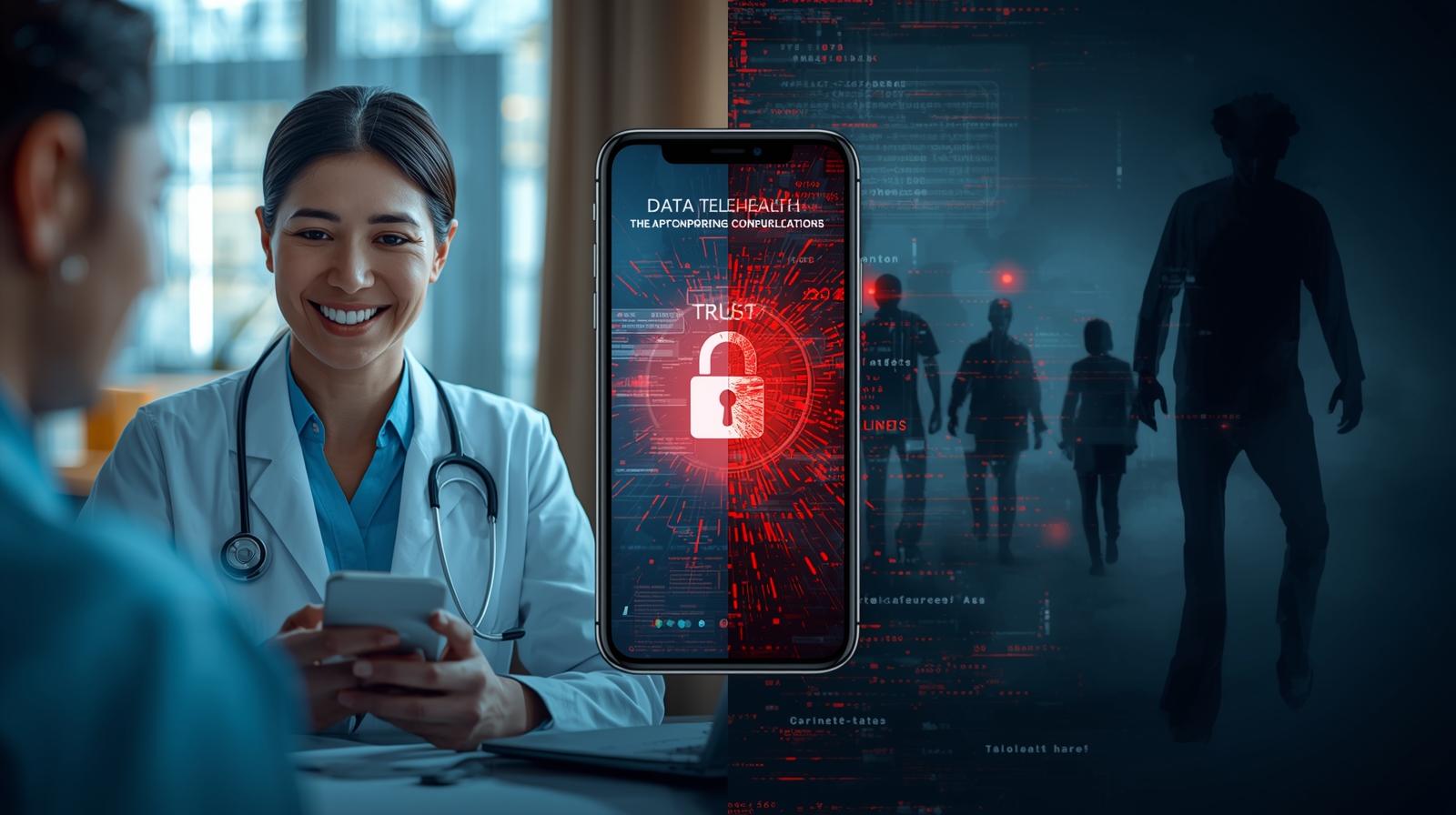
You might think opening a telehealth app and chatting with a doctor is harmless like sending a quick text. But what if that “quick consult” exposes your most private health data to hackers, advertisers, or third-party trackers?
What users still don’t know about telehealth apps could have serious consequences.

Why Telehealth Apps Seem Perfect And What’s Lurking Beneath
With smartphones in almost every pocket and internet speeds improving globally, telehealth apps giving remote access to doctors, prescriptions, or health advice seem like a no-brainer. They promise convenience, speed, and privacy compared to crowded clinics.
But behind that convenience lurks a big problem: your health data is extremely sensitive, and many telehealth apps treat it like regular app data often without the protections you expect.
Major Hidden Risks in Telehealth Apps
Privacy and Data Security Concerns
-
Unencrypted or poorly protected data transfers Some telehealth apps and platforms don’t encrypt your conversation or medical records properly. This means hackers intercepting your data is a real threat. PerfectionGeeks Technologies+2averstance+2
-
Insecure storage or third-party data sharing Apps may store your medical information on servers that are not secure, or even share it with advertisers, analytics firms, or other third-party vendors. privacyinternational.org+2TechTarget+2
-
Lack of transparency weak or missing privacy policy Research shows many mobile health apps (mHealth) omit clear privacy policies, or collect more data than disclosed. arXiv+1
-
Excessive permissions Some apps request access to phone features (location, microphone, SMS, calls) that are unnecessary for a simple consult opening more vectors for abuse. A recent audit of 272 Android health apps found alarming levels of such behavior. arXiv
Doctors and patients alike are raising the alarm. PubMed+2AMA Journal of Ethics+2
Risks from Unregulated or Inadequately Regulated Apps
Not all telehealth apps operate under strict healthcare regulations. In fact, many:
-
Aren’t covered by laws designed to protect patient privacy. For example, regulations like those protecting medical records often apply only to traditional healthcare providers not third-party apps. AMA Journal of Ethics+1
-
Sometimes use generic video-sessions or messaging platforms (not designed for medical consultations), which lack proper encryption or security safeguards. Mission Connection Healthcare+2TrueNorth ITG+2
-
Store consultation data (audio, video, chat logs) for long periods sometimes years which increases risk if servers are breached or mismanaged. For example, one app previously retained video consultations for 10 years. privacyinternational.org
What Recent Research & Doctors Are Reporting
Widespread Privacy Violations in mHealth Apps
A 2024 review of mobile health apps revealed many users remain unaware or unconcerned about privacy risks but that doesn’t mean the risk isn’t real. JMIR+1
Further, a 2025 audit of 272 Android health apps exposed shocking details:
| Risk Category | Percentage of Apps Affected |
|---|---|
| Request fine-grained location without disclosure | 26.1% arXiv |
| Silent call initiation | 18.3% arXiv |
| Unencrypted data transmission | 42% arXiv |
| Use of deprecated encryption (e.g. SHA-1) | 49.3% arXiv |
| Vulnerable to known attacks (e.g. StrandHogg 2.0) | Vulnerable subset identified arXiv |
This demonstrates that many apps are built or maintained without rigorous security standards.
Data Exploitation, Not Just Leaks
It’s not just about breaches some telehealth apps monetize your data in subtle ways:
-
Sharing or selling metadata (like usage patterns, symptoms, medications) to advertisers or analytics firms. privacyinternational.org+1
-
Over-collecting data beyond what’s needed for care under the pretense of “analytics” or “improving service.” PMC+1
-
Minimal or vague user consent for data use, meaning many people inadvertently allow use of their data beyond medical consultation. arXiv+1
Why Doctors Are Warning Their Patients (But Many Users Still Don’t Know)
-
Lack of standardization and regulation: As one physician-ethicist analysis put it, existing laws were built for traditional clinics not sprawling app ecosystems. Many telehealth apps fall outside the scope of health-data regulation. AMA Journal of Ethics+1
-
Patients often trust convenience over privacy: Because telehealth feels easy and familiar like any other app users don’t always think twice about terms they accept. A recent systematic review showed users’ data-security concerns vary widely depending on their background many accept risk if they perceive the benefit as high. JMIR+1
-
Developers prioritize speed over security: Rapid growth of telehealth means many apps are built quickly — sometimes with minimal security practices and patched slowly, if at all. Mission Connection Healthcare+1
-
Third-party dependencies increase risk: Apps relying on third-party video, storage, analytics, or ad networks may expose patients’ Protected Health Information (PHI) without clear disclosure. AppMaster+1
As a result, even well-meaning apps may expose users to privacy risks often without users realizing.
Common Mistakes Users Make And How They Can Stay Safer
What You Might Be Doing Wrong
-
Assuming all telehealth apps are safe just because they feel like “normal apps.”
-
Using telehealth apps over public or unsecured Wi-Fi.
-
Not reading or understanding the privacy policy or terms of service.
-
Saving sensitive records on devices without encryption or strong passwords.
-
Using generic video platforms (e.g. a regular video call app) instead of a secure, health-oriented telehealth app.
Practical Safety Tips From Experts
Here’s what experts recommend for safer telehealth use:
-
Use a private, secure internet connection avoid public Wi-Fi or use a VPN. Department of Health & Human Services+1
-
Enable multi-factor authentication (MFA) if available. Department of Health & Human Services+1
-
Have your consultation in a private room, and avoid speakerphone or shared devices. Department of Health & Human Services
-
Delete old records, chat logs, or downloaded files when no longer needed. Department of Health & Human Services+1
-
Prefer apps/platforms that explicitly state compliance with health-data protection laws (or HIPAA-equivalent) and avoid unknown or suspicious apps.
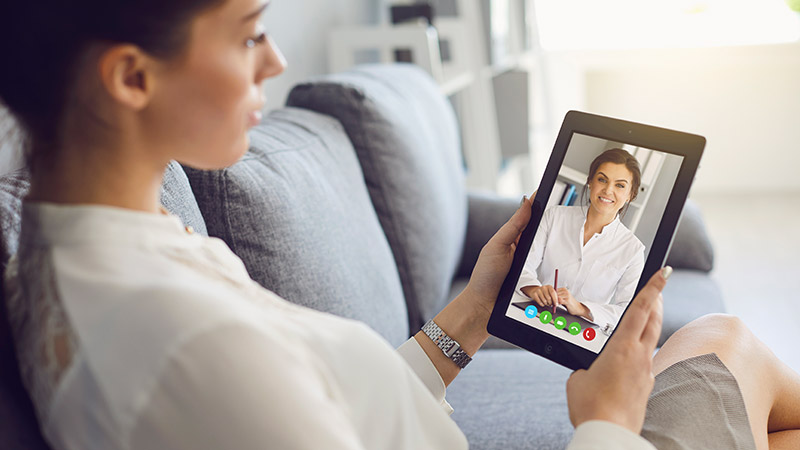
How Telehealth Apps Compare Trusted vs Risky
What Makes a “Trusted” Telehealth App
| Feature | Why It Matters |
|---|---|
| Clear, detailed privacy policy | Shows transparency about data handling PMC+1 |
| End-to-end encryption for video, chat, data storage | Prevents unauthorized interception or data leaks Department of Health & Human Services+1 |
| Minimal required permissions only what’s necessary | Limits what app can access, reducing unnecessary exposure arXiv+1 |
| Multi-factor authentication & secure log-in | Stronger defense than just password protections Imenso Software+1 |
| Transparent data retention and deletion policy | Ensures your health records aren’t kept longer than needed privacyinternational.org+1 |
Red Flags What to Watch Out For
-
Vague or missing privacy statements.
-
Requesting access to location, contacts, calls, SMS when not medically necessary.
-
Little clarity about where data is stored (which country, which servers).
-
Use of third-party ad/analytics SDKs.
-
Lack of regular updates or signs of app neglect.
Patient Awareness: What Studies Reveal
-
A 2024 systematic review showed many patients are unaware or unconcerned about privacy risks especially if they trust the care or perceive benefits as high. JMIR+1
-
Other research highlights that even when users are aware of risks, they prioritize convenience and often accept potential data exposure without understanding full implications. JMIR+1
-
Some people express concerns only when a breach or scandal arises meaning many users are complacent until it’s too late.
This complacency worries many medical professionals and privacy advocates alike.
The Real-Life Consequences of Telehealth App Failures
What Could Go Wrong
-
Personal identity theft — health data is “gold” for hackers because it can be used for identity theft, insurance fraud, or black-mail. Imenso Software+1
-
Loss of privacy and dignity — imagine private consultations (mental health, sexual health, addiction) exposed due to poor security or data leaks.
-
Data commodification — your health history could be sold to advertisers or analytics firms without your consent or knowledge.
-
Mistrust in digital healthcare — breaches erode trust, discouraging people from seeking care especially vulnerable or marginalized patients.
-
Regulatory and legal fallout — apps not compliant with health-data laws may face sanctions, but that doesn’t help patients whose data was already compromised. privacyinternational.org+1

Why the “Digital Doctor” Boom Needs Better Guardrails
With the explosion of telehealth especially after the COVID-19 pandemic more companies are building health apps than ever before. But regulation, security, and oversight haven’t kept pace.
-
Many apps operate in legal gray zones: not traditional clinics, not purely social apps. That blurs lines for regulation. AMA Journal of Ethics+1
-
Security standards are inconsistent some apps look like they were built by startup developers who prioritized speed over safety. Mission Connection Healthcare+2AppMaster+2
-
Data retention practices are unclear some keep sensitive consultations for years. privacyinternational.org+1
Unless this changes, patients may continue using “telehealth” unaware they are exposing themselves to serious risk.
What Regulators and Developers Must Do And What Users Should Demand
For Regulators & Policymakers
-
Extend data-protection laws to include third-party telehealth apps not just traditional clinics.
-
Require mandatory security audits and encryption standards for any app handling Protected Health Information (PHI).
-
Mandate transparency in data collection, storage, sharing, and deletion practices.
-
Hold developers accountable with penalties for breaches, data misuse, or non-compliance.
For Developers & Telehealth Providers
-
Build apps with security from day one (secure-by-design). Don’t treat security as an afterthought.
-
Provide clear, understandable privacy policies, and get explicit informed consent before collecting data.
-
Minimize data collection only gather what’s strictly necessary.
-
Implement strong user authentication (MFA), encryption, secure servers, regular updates.
-
Offer easy-to-use user controls for data deletion, consent revocation, and transparency.
For Users (You) What You Should Do Right Now
-
Be selective choose apps with clear privacy policy, encryption, minimal permissions, and good reviews.
-
Use secure internet (home Wi-Fi with password, VPN if possible), not public hotspots.
-
Always use private locations no public calls about medical info.
-
Delete old records or downloaded data when no longer needed.
-
Ask questions of providers or support: Where is my data stored? Who can access it? For how long? Can I delete it?
FAQ What You May Be Wondering
Q: Are all telehealth apps risky?
A: Not necessarily there are many reputable, secure telehealth apps that follow strong privacy and security standards. The risk comes when apps cut corners or operate without transparency.
Q: I trust my doctor doesn’t that mean the app is safe?
A: Trusting your doctor is good but the technology behind the app matters. Even good doctors may use insecure apps or platforms if the app’s backend lacks safeguards.
Q: What’s the worst that can happen?
A: In worst cases: your private medical history could be exposed, sold to advertisers, used for identity theft or insurance fraud or remain stored indefinitely without your knowledge.
Q: How can I check if an app is safe?
A: Look for clear privacy policy, encryption (end-to-end), minimal app permissions, regular updates, user-controlled data deletion, and ideally some external audit or compliance statement.
Q: Should I stop using telehealth apps entirely?
A: Not necessarily telehealth offers real benefits. But use them cautiously and selectively, applying safety practices. Demand transparency and minimal data use.
Final Thoughts Convenience Isn’t Always Safe
Telehealth apps have revolutionized how we access care especially for people in remote areas or with busy lives. But like any powerful technology, they carry risk.
Many users and even some doctors still don’t realize how much personal health data they’re entrusting to apps that may not be built to handle it securely. As studies show, the problems are widespread: insecure apps, opaque data practices, and little regulation.
The takeaway: treat telehealth as you would any critical, privacy-sensitive service. Be vigilant. Demand transparency. Choose your apps wisely. Protect your data as you would your most sensitive personal information because it is.
Conclusion
Telehealth apps can offer real benefits but only if we’re aware of the hidden dangers and take steps to safeguard our privacy.
Share now: talk to friends, family, and anyone using telehealth many of us may be unaware of what we’re really giving away.
Want to dig deeper? Read more about The shocking truth about telehealth, or check out online doctor vs in person doctor
Sources & References