Introduction
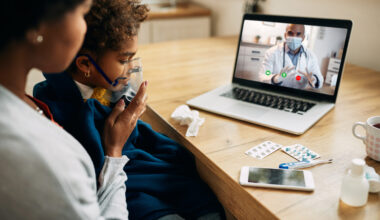
Online Doctor vs. In-Person Doctor is a debate every parent faces today. While virtual visits promise convenience, they may hide pediatric risks that in-person care can catch — risks no one warned us about.
Something as simple as a video call for your child’s check-up might seem harmless — even convenient. But what if that convenience hides hidden pediatric risks few parents talk about?
If you think an online doctor visit is “good enough,” read this first.
Why This Conversation Matters
Telemedicine — the practice of seeing Online Doctor over video calls or phone — exploded during the pandemic. For busy parents, it promised convenience: no traffic, no waiting rooms, and access to care anytime. But for children, virtual visits introduce unique challenges and potential dangers.
As a parent, you deserve to know the trade-offs. This article digs into what the research says — when online doctors are okay, and when only an in-person doctor can protect your child’s health.
What Is Pediatric Telemedicine (Online Doctor)?
Telemedicine for children includes video consultations, phone calls, smartphone apps, and other remote tools — a convenient “clinic in your pocket.” It’s often promoted for:
-
Minor illness follow-ups (e.g. skin rashes, mild asthma)
-
Chronic condition monitoring (e.g. diabetes)
-
Mental health check-ins
-
Remote or rural access where in-person care is hard to reach
Studies show that for some conditions, remote care can indeed offer comparable outcomes to face-to-face visits. PMC+2PubMed+2
And in specific contexts — like follow-up for medically complex children — telemedicine has reduced hospital or emergency visits. Pediatrics Publications+1
But despite these benefits, telemedicine comes with real risks — especially for children.
The Hidden Pediatric Risk: Why Online Doctor ≠ In-Person Doctor
Telemedicine often cannot replace a full physical examination
Many common pediatric assessments rely on physical touch or nuanced sensory cues:
-
Palpating an abdomen for pain or swelling
-
Listening to subtle lung or heart sounds with a stethoscope
-
Checking ear canals for infection (otoscopy)
-
Feeling for swollen lymph nodes or lumps
Online Doctor visits can’t reliably do these. According to a review on pediatric telemedicine, the inability to conduct a complete, objective physical exam is a major limitation — especially for children under 2 or when image/video quality is poor. MDPI+1
Even advanced mobile-medical devices, while promising, show limited concordance with in-person exams in certain areas, particularly in infants. JAMA Network
This means crucial signs — early indicators of serious conditions — might be missed.
Misdiagnosis and Missed Diagnoses Are Real Risks
Because telemedicine depends on what the parent and child can show or describe — rather than a trained physician’s full examination — there’s a higher chance of misdiagnosis or missed conditions. Omega Pediatrics+2Frontiers+2
For instance:
-
Ear infections (common in children) often require a look at the eardrum — difficult via video. MDPI
-
Respiratory or throat illnesses may need lab tests (e.g. throat swabs) — cannot be done remotely. MDPI+1
-
Subtle skin, joint, or abdominal problems might go unnoticed. Infusion Health Telemedicine Clinic+1
Parents might assume “the doctor saw everything,” when in fact only a partial picture was possible.
Emotional and Communication Gaps — Especially for Children
For many kids — particularly younger children — virtual visits can be awkward, scary, or simply ineffective.
According to research involving adolescent and young adult patients: even though many are “digital natives,” many still prefer in-person visits for more meaningful communication and better caregiver (parent) engagement. SpringerLink
Parents also report that telemedicine often lacks the reassuring emotional support that an in-person doctor can give — that personal presence, empathy, and the physical comfort a child may need. Dr. Ashley+1
For children who are anxious, non-verbal, or unable to clearly describe their symptoms — common in pediatric care — this gap can make virtual assessments unreliable.
Technology & Access Challenges Compound the Risk
Not every family has high-speed internet, a stable device, or a quiet environment for a tele-visit. Poor lighting, unstable connection, and low-resolution cameras can severely limit what a doctor can observe. MDPI+2medicusunion.com+2
And in many parts of the world — including rural or low-income areas — digital access remains a major barrier. Frontiers+1
Moreover, security, privacy, and medical-legal issues remain — online platforms may not always meet stringent data-protection standards. doctortelemed.net+1
Finally, many telemedicine platforms and providers are not trained to manage complex pediatric cases virtually. Frontiers+1
When Online Doctor Works — and When It Doesn’t
Let’s be clear: telemedicine/online doctor has value. For some scenarios, it’s a helpful tool to increase access, convenience, and follow-up care. That said, it is not a panacea.
Here’s a breakdown of when it may be safe, and when you should insist on an in-person doctor.
Cases Where Online Doctor (Telemedicine) Might Be Acceptable
| Use case | Why it works |
|---|---|
| Routine follow-ups for stable chronic conditions (e.g. diabetes, mild asthma) | Studies found telemedicine reduced hospital visits and was cost-effective while maintaining care quality. Pediatrics Publications+1 |
| Minor skin conditions, mild allergic reactions, simple questions/consultations | Visual inspection and basic guidance can be sufficient if symptoms are mild and clear. |
| Behavioral or mental health check-ins, counseling (for older kids/teens) | Telemedicine can increase access and convenience, and for non-physical issues it’s often effective. PMC+1 |
| Aftercare, follow-ups, chronic-care monitoring when mobility/access is a challenge | Telemedicine helps families avoid frequent trips to hospital and reduces exposure to other illnesses. JAMA Network+1 |
Cases Where In-Person Doctor Is Strongly Recommended
-
First-time or acute illnesses, especially if symptoms involve ears, throat, abdomen, respiratory system, or require lab tests (e.g. infections, suspected injuries) — virtual exams may miss critical signs.
-
Infants and toddlers: children under 2 — remote examinations are especially unreliable for auscultation or abdominal checks. MDPI+1
-
When a detailed physical exam, lab work, or specialized equipment is required (e.g. blood tests, imaging).
-
Cases needing emotional support, reassurance, or where child has difficulty communicating symptoms.
-
Emergency situations (sudden injuries, high fever, difficulty breathing, etc.).
The Research Picture: Mixed — Use With Caution
A systematic review of randomized controlled trials on pediatric telemedicine found that in 11 studies covering conditions like asthma, skin disorders, obesity, and ADHD — outcomes of telemedicine were “comparable to and occasionally more beneficial” than in-person care. PMC+1
Still, the authors noted that most evidence was “low or moderate quality,” often due to study design limitations or the indirect nature of telemedicine interventions. PMC
More recent research using mobile medical devices to conduct remote physical exams in children did find “satisfactory measurement concordance” for certain exam types (heart/lung auscultation, throat, skin) — but with limitations, especially for infants or abdominal exams. JAMA Network
In critical settings — like emergencies or surgical trauma care — a systematic review found telemedicine diagnostic accuracy could be high, but many caveats remain: proper equipment, trained staff, and limitations in interpreting subtle signs. SpringerLink+1
Finally, broader reviews also highlight challenges: misdiagnosis risk, privacy and data-security concerns, digital divide issues, and lack of regulatory and legal clarity. doctortelemed.net+2Frontiers+2
Bottom line: Telemedicine can be a helpful complement — but it is rarely a full substitute for in-person pediatric care.
Why “Convenience” Can Be a Double-Edged Sword
For many parents, telemedicine/online doctor is marketed as a time-saving, stress-reducing option — and in some cases, it is. But that convenience can lull families into a false sense of security.
-
Delayed escalation of care: A parent might think “the doctor saw the rash, it’s fine,” when in reality the video was too dark to show signs of infection — delaying proper treatment. Infusion Health Telemedicine Clinic+1
-
Over-relying on self-reporting: Children — especially younger ones — may not articulate symptoms well. Parents might miss subtle signs without a trained physician’s physical exam skills.
-
False reassurance: Just because a doctor says “it looks okay on video” doesn’t mean there’s nothing wrong — many serious issues need hands-on evaluation or diagnostic tests.
-
Data & privacy risk: Sensitive child health data moving through internet platforms may be vulnerable if security and compliance are weak. doctortelemed.net+1
The bottom line: convenience isn’t worth sacrificing — or risking — your child’s health.
A Balanced View: How to Use Telemedicine Safely — And When to Choose In-Person
If you’re a parent considering telemedicine — or currently using it — here are best-practice guidelines:
-
Use telemedicine for follow-ups, minor or stable conditions, not first-time acute illnesses.
-
Set clear criteria for escalation — ask the doctor: “If symptoms worsen, or X happens, should we come in for a physical exam?”
-
Ensure good lighting, a stable internet connection, and quality video — poor tech undermines care.
-
Be ready to advocate for in-person care — insist if the child seems worse, or symptoms involve ears, throat, abdomen, or breathing.
-
Keep medical history & test results handy — remote doctors often rely heavily on parent-reported history.
-
Use telemedicine as a complement, not replacement, to regular pediatric care — especially for infants and younger children.
Quick Comparison: Online Doctor vs. In-Person Doctor for Kids
| Feature / Concern | Online Doctor (Telemedicine) | In-Person Doctor |
|---|---|---|
| Physical exam quality | Limited: visual only; no palpation, limited auscultation or tests | Full exam, labs, diagnostic tools available |
| Suitability for infants/toddlers | Weak — remote assessment unreliable, especially for abdomen/heart/lung checks MDPI+1 | Strong: doctor can use stethoscope, observe behaviour, perform age-appropriate exam |
| Chronic illness monitoring / stable conditions | Often effective — studies show comparable outcomes Pediatrics Publications+1 | Also effective; often preferred for complex cases |
| Initial diagnosis of acute conditions | Risky — high chance of misdiagnosis or missed signs Omega Pediatrics+1 | Best choice — full diagnostic capability |
| Convenience & access | High — no travel, fast scheduling, useful for remote areas | Lower — travel, waiting times, scheduling constraints |
| Emotional support & trust building | Weaker — limited rapport, less physical comfort → may feel impersonal Dr. Ashley+1 | Stronger — personal presence, better for building trust and calming kids |
| Privacy/data security risk | Present — depends on platform’s security & compliance doctortelemed.net+1 | Lower — traditional systems tend to have regulated privacy practices |
| When urgent or serious care needed | Not ideal — may delay necessary in-person intervention | Ideal — quick diagnosis, tests, immediate treatment |
Real Stories (Why This Matters)
Many parents have shared experiences of near-mistakes using only telemedicine/online doctor for their children:
“The rash looked fine on video, but day two the swelling got worse — when we saw the doctor in person, it was already infected.”
“My toddler wasn’t acting right, but over Zoom she seemed ‘just tired.’ The pediatrician told us to monitor — three hours later she had to be rushed to hospital.”
These aren’t isolated — anecdotal but frequent across parenting forums. The “out-of-sight, out-of-mind” risk is real — and terrifying when it involves a child’s life.
Even some pediatric care providers caution parents: telemedicine should not replace physical exams for anything beyond follow-up or stable chronic conditions. Infusion Health Telemedicine Clinic+1
Expert Insights: What Recent Research Says
-
A 2021 systematic review of pediatric telemedicine concluded that while remote care can be comparable to in-person for certain health conditions (e.g. asthma, skin issues, obesity management), most evidence quality was low to moderate, with only one study rated high. PMC+1
-
A 2023 trial assessing remote physical exams via mobile devices found satisfactory agreement with in-person exams for some parameters (heart, lung, skin, throat) — but limited reliability in abdominal and infant exams. JAMA Network
-
Systematic reviews of pediatric trauma and emergency care via telemedicine estimate high diagnostic accuracy — but only under conditions of trained staff, good equipment, and careful protocols. SpringerLink+1
-
Broader analyses still highlight major barriers: privacy/data security, variable technology access, physician licensing and inadequate training, and digital-literacy gaps among families. doctortelemed.net+2Frontiers+2
In other words: yes — telemedicine can be useful. But it’s not a catch-all fix.
What This Means for Parents — Especially in Places Like Nigeria
If you’re in regions such as Nigeria (or any area with limited resources or infrastructure), the risks of relying solely on “online doctor” visits may be even higher:
-
Internet connectivity may be unreliable or too slow — reducing exam quality or cutting off during important parts of the visit.
-
Smartphones or devices may lack good cameras, making visual assessment poor.
-
Pathogens, infections, or illnesses may go unrecognized without proper examination, which is dangerous in children whose conditions can worsen quickly.
-
Follow-up labs, imaging, or referrals might not be accessible, delaying accurate diagnosis and treatment.
In short: telemedicine/online doctor can complement pediatric care — but cannot replace in-person visits where real hands-on medical evaluation is needed.
Parental Checklist: When to Use Online Doctor — And When to Insist on In-Person
If you decide to use a virtual/online doctor for your child, ask yourself these questions:
-
Is this a follow-up for a stable condition, or a new/urgent health problem?
-
Does the child need a physical exam, lab tests, or specialized diagnosis?
-
Can you trust your internet connection and video/audio quality?
-
Would a doctor possibly miss subtle symptoms (e.g. ear infection, early signs of illness)?
-
Do you feel fully comfortable that your child is being examined thoroughly — or does something feel “off”?
-
Are you prepared to escalate to in-person care if the doctor recommends it or if symptoms change?
If the answer to any of these is “no” — schedule an in-person visit.
FAQ: Parents’ Most Common Questions
Q: Isn’t telemedicine better during pandemics or outbreaks anyway — doesn’t it reduce exposure?
Yes — for minor issues or follow-ups, telemedicine does reduce exposure to other illnesses. It can also be a safer option for chronic-care follow-ups. But it doesn’t replace the need for physical exams when the child is sick or when a serious condition is suspected.
Q: My child had a tele-visit and seemed fine — is there still a risk something was missed?
Yes — especially with younger children. Many pediatric illnesses show subtle or internal symptoms (ear infections, lung issues, abdominal problems) that require direct examination.
Q: Can telemedicine ever be as good as in-person care?
Sometimes — for stable chronic conditions or simple follow-ups, telemedicine can be very effective. Studies have shown comparable outcomes in such cases. PMC+1 But for diagnosis of new illness or acute conditions, in-person care remains the gold standard.
Q: What about using telemedicine as a first step, then going to see a doctor if needed?
That’s often a good compromise — using virtual visits for screening or triage, then following up in person if there’s doubt. But parents must remain vigilant and ready to escalate when necessary.
Q: My child has a chronic illness — is telemedicine appropriate?
It can be — for routine monitoring, follow-ups, medication adjustments, or consultations when travel is difficult. In fact, studies show telemedicine can reduce hospital visits for medically complex children while maintaining safety. Pediatrics Publications+1
Conclusion: Convenience Is Not Always Worth the Risk
Telemedicine — virtual, online doctor visits — is here to stay. It offers amazing convenience and access. For some pediatric situations, especially follow-ups and stable conditions, it can deliver good care.
But for children, especially infants and toddlers, or when the health issue is new or serious, telemedicine carries real pediatric risks. Misdiagnosis. Missed diagnoses. Delayed treatment. Emotional disconnect.
As a parent, it’s critical to treat virtual visits as a complement, not a replacement — to use them when appropriate, and to insist on in-person care when necessary.
Your child’s health deserves more than a blurry video feed and hope.
If this resonated with you — share this post with other parents. Let’s spread awareness: telemedicine is useful, but it’s no substitute for careful, hands-on pediatric care. Share Now.